

Table of Contents
- Why Thin Winter Layers Beat One Thick Coat
- Winter Layering for Kids: The 3-Layer Rule That Works
- Kids Base Layers for Cold Weather: Fabrics That Matter
- Car Seat Winter Clothing Safety: What to Skip
- Outfit Examples by Age, Activity, and Temperature
- How to Tell If Your Child Is Too Hot or Too Cold
- Common Layering Mistakes Parents Make
- Conclusion: Warmth Without the Waddle
- Frequently Asked Questions
Last Updated: October 6, 2026
Why Thin Winter Layers Beat One Thick Coat
Learning how to dress children for winter without bulk 2026 starts with one shift: swap the single heavy coat for several thin layers. Thin layers trap warm air and can be added or removed as the weather changes, giving warmth with freedom of movement.

Layering means wearing several thin pieces together so each traps warmth and moves moisture away from skin. Air is the best insulator you can wear.
cold weather safety guidance for families
The old approach fails for three reasons:
- A thick coat is all-or-nothing. There is no middle setting.
- Bulky clothing traps sweat. Wet skin gets cold fast.
- Puffy sleeves and thick pants limit how kids run, climb, and play.
Thin layers fix all three.
Winter Layering for Kids: The 3-Layer Rule That Works
The 3-layer rule is simple: a base layer manages moisture, a middle layer holds heat, and an outer layer blocks wind and snow. Skip one and the system weakens.
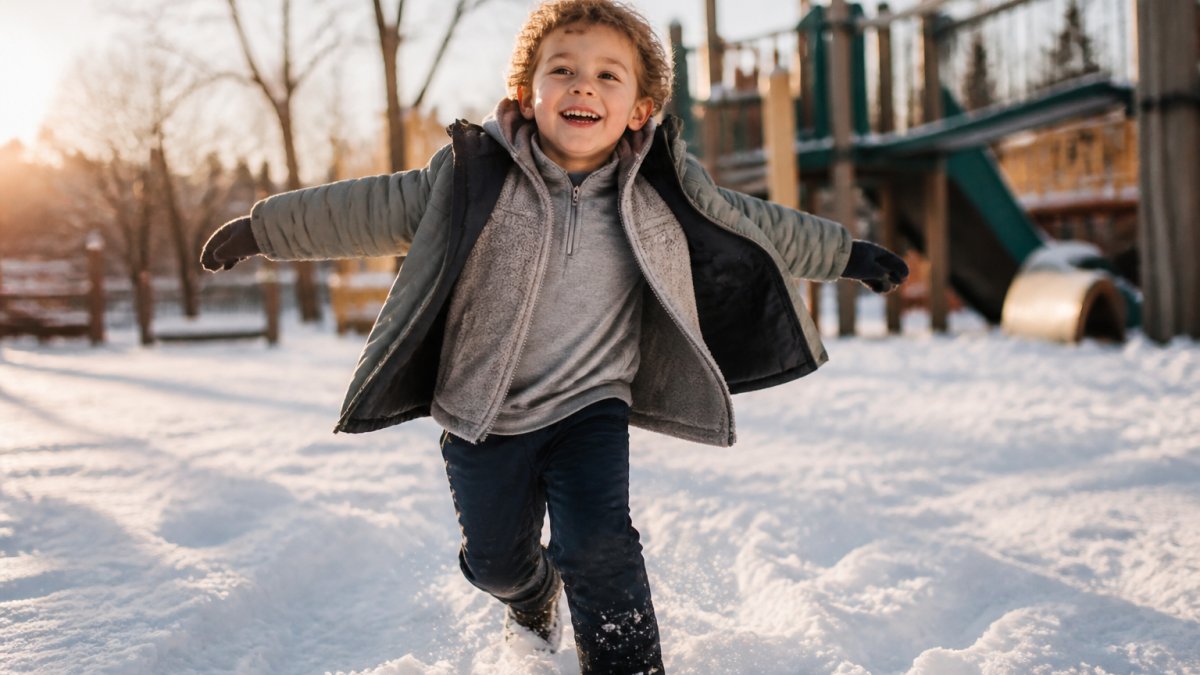
Here is how the three layers break down.
Base Layer: What to Wear Under a Winter Coat
The base layer sits against skin, so it must pull sweat away instead of holding it. What to wear under a winter coat: a thin, fitted wool or synthetic top and bottom, never cotton.
Cotton soaks up sweat, stays wet, and pulls body heat away fast, a common winter mistake. Merino wool or a polyester blend stay dry and feel soft, which matters for sensitive skin.
Middle Layer: Insulation Without the Puff
The middle layer traps warm air and does not need to be thick. A light fleece, thin wool sweater, or quilted vest all work without bulk.
This is the layer you add or remove most often: a morning that starts at 20°F and warms to 40°F by afternoon needs a middle layer that comes off easily. Fleece is light, fast-drying, and cheaper than wool; wool holds more warmth for its weight.
Outer Layer: Picking a Winter Coat That Moves
The outer layer blocks wind, snow, and rain. The best winter coat for a child is water-resistant, hooded, and light enough to run in.
Our Eddie Bauer Youth 3-in-1 Jacket does exactly this. The shell is water-resistant, the polar fleece lining zips out, and it comes in youth sizes XS through XL.

For kids who run hot or play hard, the Spyder Youth Superlite Jacket is a strong pick. It is midweight, hooded, and built to move.
Kids Base Layers for Cold Weather: Fabrics That Matter
Fabric choice decides whether a layer keeps your child warm or makes them colder. For kids base layers for cold weather, the rule is simple: wool or synthetic next to skin, fleece or wool in the middle, and a water-resistant shell on top.

Fabric |
Best Layer |
Keeps Warm When Wet? |
Weight and Weave Notes |
Bulk Level |
|---|---|---|---|---|
Merino wool |
Base |
Yes |
Fine-gauge knits (150-200 gsm) are thin enough for under clothes; heavier weights feel bulky |
Low to medium |
Polyester blend |
Base |
Yes |
Smooth, flat knits glide under other layers; brushed backings feel warmer but add slight bulk |
Low |
Fleece |
Middle |
Yes |
100-weight microfleece is thin; 200-weight and up adds noticeable puff |
Low to high |
Cotton |
None in winter |
No |
Holds sweat, gets cold, and loses insulation when damp |
Low but ineffective |
Down |
Middle |
No |
Very warm for its weight but compresses under straps and loses loft when wet |
Medium to high |
Why weave matters for moisture. A smooth, tight knit moves sweat away faster than a loose, fluffy knit, which is why a thin polyester base layer often feels drier than a thicker cotton thermal.
Fit check for base layers. A base layer should sit close to the skin without squeezing.
A note on cotton's one place. Cotton has one place in winter: a light layer for short trips, never against skin during active play.
cold weather safety guidance for families
Car Seat Winter Clothing Safety: What to Skip
Bulky coats and car seats do not mix.
The fix is easy: dress your child in thin layers for the car, then add the coat on top of the harness once buckled in. Straps stay tight, and the coat goes on backward over the arms.
child passenger safety guidance
Thin layers make this simple. A base layer plus a light fleece keeps a child warm in a cold car without adding bulk under the straps.
Outfit Examples by Age, Activity, and Temperature
The right outfit depends on age, activity, and temperature. Babies sit still and need more insulation; toddlers and big kids run hot and need less. A 20°F day with wind is not the same as one with sun, so adjust for wind, precipitation, and time outside.
How to read this guide: Find the temperature band, then match the activity. "Active" means running, climbing, or sledding. "Sedentary" means sitting in a stroller or standing at a bus stop.
30-40°F
Babies (0-12 months), sedentary:
- Base: thin wool or synthetic bodysuit
- Middle: light fleece bunting
- Outer: softshell or fleece-lined jacket
- Extras: hat, mittens, booties
Toddlers (1-3 years), active:
Eddie Bauer Youth 3-in-1 Jacket, Small to Large →
- Base: synthetic top and leggings
- Middle: skip it if they are running
- Outer: lightweight insulated jacket or 3-in-1 shell
- Extras: hat, mittens, waterproof boots
Big kids (4-10 years), active:
- Base: synthetic top and leggings
- Middle: thin fleece pullover, removable
- Outer: water-resistant shell
- Extras: hat, gloves, warm socks
20-30°F
Babies (0-12 months), sedentary:
- Base: thin wool or synthetic bodysuit
- Middle: fleece bunting plus a thin wool sweater
- Outer: softshell or fleece-lined jacket
- Extras: hat, mittens, booties, blanket over the stroller
Toddlers (1-3 years), active:
- Base: synthetic top and leggings
- Middle: fleece pullover
- Outer: 3-in-1 jacket
- Extras: hat, mittens, waterproof boots
Big kids (4-10 years), active:
- Base: merino or synthetic top
- Middle: thin wool sweater
- Outer: lightweight insulated jacket
- Extras: hat, gloves, warm socks
10-20°F
Babies (0-12 months), sedentary:
- Base: midweight wool or synthetic bodysuit
- Middle: fleece bunting plus a thin wool sweater
- Outer: insulated softshell or down alternative jacket
- Extras: hat, mittens, booties, blanket, stroller footmuff
Toddlers (1-3 years), active:
- Base: midweight synthetic top and leggings
- Middle: fleece pullover plus a thin vest
- Outer: insulated 3-in-1 jacket
- Extras: hat, mittens, waterproof boots, neck gaiter
Big kids (4-10 years), active:
- Base: midweight merino or synthetic top and leggings
- Middle: fleece pullover
- Outer: insulated jacket
- Extras: hat, gloves, warm socks, neck gaiter
Below 10°F
Keep outdoor time short. Frostbite risk rises quickly for exposed skin. For babies and toddlers, aim for 15-20 minutes at a time. For big kids, 20-30 minutes with frequent checks.
Babies (0-12 months), sedentary:
- Base: midweight wool or synthetic bodysuit
- Middle: fleece bunting plus a thin wool sweater
- Outer: insulated softshell or down alternative jacket
- Extras: hat, mittens, booties, blanket, stroller footmuff, face covering
Toddlers (1-3 years), active:
- Base: midweight synthetic top and leggings
- Middle: fleece pullover plus a thin vest
- Outer: insulated 3-in-1 jacket
- Extras: hat, mittens, waterproof boots, neck gaiter, face covering
Big kids (4-10 years), active:
- Base: midweight merino or synthetic top and leggings
- Middle: fleece pullover plus a thin vest
- Outer: insulated jacket
- Extras: hat, gloves, warm socks, neck gaiter, face covering
Activity-Specific Adjustments
Playground time: Drop the middle layer for kids who run nonstop; one layer too many leads to sweating.
Commuting or waiting for the bus: Add the middle layer back. Standing still is when kids lose heat fastest.
Sledding or snow play: Add a waterproof outer layer.
Car travel: Dress for the car, not the destination.
For everyday wear that holds up in the wash, the Lands' End Kid's Full Zip Jacket is a great mid layer.
How to Tell If Your Child Is Too Hot or Too Cold
Check the back of the neck, not the hands or feet. A child's hands and feet often feel cool even when their core is warm, so they are a poor guide.
- Warm and dry neck: just right.
- Sweaty neck or back: too hot. Remove a layer.
- Cold neck plus shivering: too cold. Add a layer.
- Clammy or damp skin: the base layer is holding sweat. Switch to wool or synthetic.
Check every 30 minutes during outdoor play; kids heat up fast when they run and cool down fast when they stop.
Common Layering Mistakes Parents Make
Most layering problems come from a few repeat mistakes. Fix these and winter dressing gets easier.
- Starting with cotton. Cotton holds sweat and gets cold. Use wool or synthetic next to skin.
- Overdressing for active play. A running child needs one less layer than a sitting child.
- Skipping the base layer. A coat alone traps sweat against skin.
- Buying the coat too big. Extra room lets cold air move around the body.
- Forgetting wind and water. Wind cuts through fleece. The outer layer must block it.
- Ignoring the car seat rule. Bulky coats under harness straps are unsafe.
The pattern: people dress kids for how cold it feels standing still, not for how they actually play.
Conclusion: Warmth Without the Waddle
Start with a wool or synthetic base layer, add a light fleece middle, and finish with a water-resistant shell. Check the neck, not the hands.
At Tots & Trends by Morgan, we curate kids' outerwear built for real play. Our curated selection of outerwear mixes style with the warmth kids need all season.
Get started with Tots & Trends by Morgan and dress your child for every cold-weather adventure.
Frequently Asked Questions
What is the 3-layer rule for dressing kids in winter?
The 3-layer rule means a moisture-wicking base layer against the skin, an insulating middle layer like fleece, and a weather-resistant outer layer. Each layer adds warmth without much thickness, so kids stay warm without a bulky coat. For winter layering for kids, start with a thin thermal top, add a fleece or sweater, then finish with a water-resistant jacket. You can add or remove layers as temperatures change through the day.
What should a child wear under a winter coat?
Under a winter coat, kids should wear a thin base layer plus one insulating middle layer, such as a fleece or wool sweater. Avoid thick cotton hoodies or multiple heavy sweaters, which trap sweat and add bulk. For example, a thermal long-sleeve top and a midweight fleece under a 3-in-1 jacket keeps a child warm while leaving room to move and buckle safely in a car seat. Remove the coat entirely before buckling up.
Are thin layers warmer than one thick layer?
Thin layers are often warmer because each layer traps a pocket of air, and air is what insulates. A single thick coat leaves gaps and can cause overheating once a child starts running. Three thin layers, a base layer, a fleece mid layer, and a shell, let you adjust warmth as activity and temperature change. This approach also reduces bulk, so kids can play freely and fit properly in car seats.
How do I know if my child is too hot or too cold in winter clothing?
Check the back of the neck or the torso, not the hands or feet, which often feel cool even when the body is warm. If the skin is sweaty or clammy, remove a layer. If it feels cool, add one. For babies and toddlers, avoid overdressing since they cannot remove layers themselves. Signs of overheating include flushed cheeks, fussiness, and damp hair. Adjust layers before heading outside rather than waiting for complaints.