

Table of Contents
- Why Coordinated Sibling Outfits Are Worth the Effort
- Step 1: Start with a Shared Color Palette
- Step 2: Mix Patterns and Textures Like a Pro
- Step 3: Choose Age-Appropriate Silhouettes for Each Child
- Coordinating Sibling Outfit Ideas for Everyday Wear
- Sibling Photoshoot Outfit Inspiration That Looks Natural
- Unique Birthday Outfit Ideas 2026 for Siblings
- Common Mistakes to Avoid When Styling Siblings
- Frequently Asked Questions
Last Updated: September 4, 2026
Coordinating what your kids wear can feel like a logistical puzzle, especially when their tastes and sizes differ wildly. Yet the payoff is real: family photos look more polished, morning arguments shorten, and the kids feel a special connection when they are part of a matching pair. This guide from Tots & Trends by Morgan walks you through styling matching sibling outfits without losing each child's personality.
The secret to great sibling style is not identical clothes but visual unity through a shared color story or common theme. Whether for a holiday card, birthday party, or just a Tuesday, the strategies below help you build a wardrobe system that makes dressing two or more kids simpler and more enjoyable.
Why Coordinated Sibling Outfits Are Worth the Effort
Coordinated sibling outfits are more than a cute photo opportunity. Complementary colors or a shared print create a sense of belonging and teamwork that child development experts encourage, reinforcing the sibling bond with a shared identity for the day.
Beyond the emotional benefits, a coordinated approach simplifies your morning routine, you reach for a pre-planned color palette instead of staring at mismatched pieces. It also makes shopping easier: buy a single versatile item, like a printed tee, and pair it with bottoms you already own in a coordinating hue.
Step 1: Start with a Shared Color Palette
Every successful coordinated look starts with a color palette. Pick two to three colors that flatter all your children and work for the season, rust, olive, and cream for fall; mint, butter yellow, and blush for spring. Once you have your palette, mix and match pieces freely.
A foolproof method is to dress each child in a different solid color from the same family, then anchor the look with a shared neutral like denim or khaki. For example, one child wears a sage green tee while the other wears a cream sweater with a subtle green stripe. The outfits read as coordinated without being matchy-matchy. This approach works because it uses color theory to create harmony, a principle Pantone's guide to color coordination explains in detail for fashion applications.
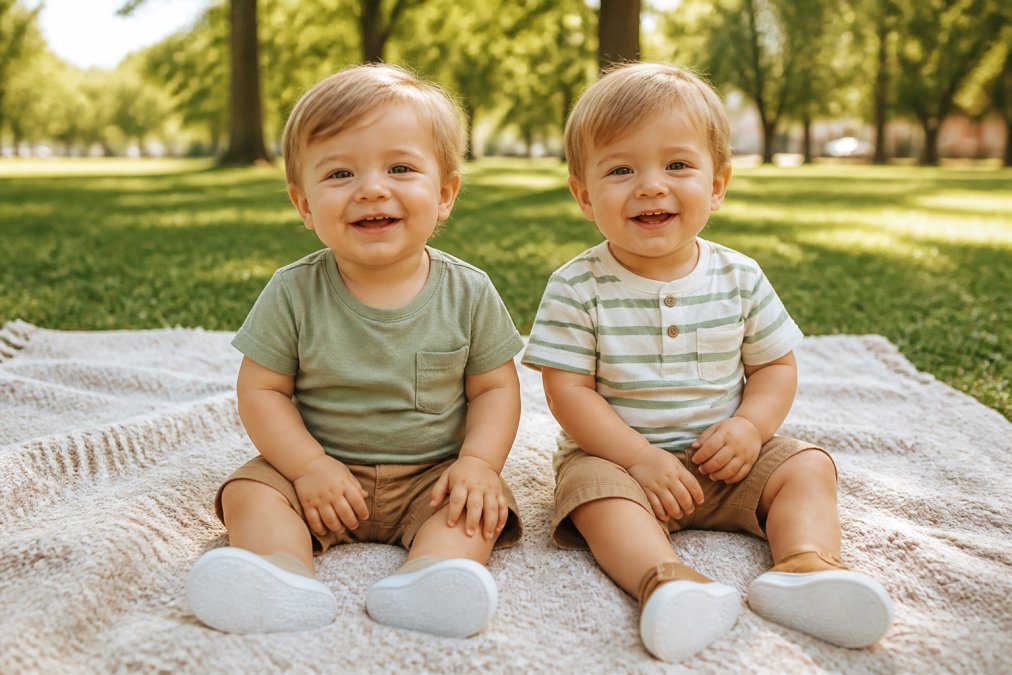
Step 2: Mix Patterns and Textures Like a Pro
Many parents shy away from patterns, fearing a visual clash. The trick is understanding print-mixing rules, which are more about proportion and color than avoidance. A common stylist rule is the 60-30-10 rule: 60% dominant solid, 30% secondary solid or neutral, and 10% bold pattern or accent, creating a balanced, cohesive look easy to replicate across two children.
The Scale Rule for Prints
When mixing prints between siblings, scale matters more than the print itself. If one child wears a large, bold floral or wide-striped shirt, the other should wear a smaller, delicate print like a micro-check or fine pinstripe. This contrast creates visual interest without competition, a toddler in a chunky Fair Isle sweater pairs beautifully with an older sibling in a fine herringbone twill shirt.
The Color-Bridge Technique
A reliable mechanism for mixing patterns is the color-bridge: choose one dominant color that appears in both prints. If one child wears a navy-and-white striped tee, the other can wear a navy plaid skirt or gingham shirt featuring the same navy tone. The shared color visually connects the patterns, even a bright red Spider-Man tee coordinates with a red-and-white polka-dot dress.

Texture as a Styling Tool
Texture coordination is an underused tool that adds depth to photos and tactile interest, even when colors are muted. The mechanism is contrast: pair a chunky cable-knit sweater with a smooth velvety dress or crisp poplin shirt. Different fabric weights catch light differently, creating dimension that photographs well, corduroy overalls with a ribbed-knit sweater for fall, linen with soft cotton jersey for summer.
A Practical Rule for Mixing Three Patterns
To mix three patterns across two or three children, use this sequence: start with a large-scale print (floral), add a medium-scale geometric (stripe or plaid), and finish with a small-scale texture (polka dot or subtle check). Ensure all three share at least one color from your palette, a technique used in high-end lookbooks that is easy to replicate at home.
When to Break the Rules
There is one exception to the scale rule: when prints are in the exact same color family and scale, such as two different gingham checks in the same blue tone. This creates a deliberate, matched effect for formal occasions or holiday photos, but for everyday wear it can look too contrived. The safest approach is to vary the scale and let color do the connecting work.
Step 3: Choose Age-Appropriate Silhouettes for Each Child
Comfort drives confidence. A toddler in a stiff collared shirt will be miserable, and it will show in photos. For younger kids, prioritize soft, breathable fabrics with easy pull-on waistbands. For older children, introduce trendier cuts like drop-shoulder tees or high-low hems, but always check for mobility.
The key is to coordinate without forcing the same silhouette. A baby can wear a romper while the older sibling wears a matching graphic tee and joggers, the shared print or color does the heavy lifting. At Tots & Trends by Morgan, the focus on quality and comfort means you can find cotton sets soft enough for sensitive skin yet stylish enough for a birthday party.
Coordinating Sibling Outfit Ideas for Everyday Wear
For daily life, you need outfits that survive playgrounds and snack time. Start with a "capsule" approach where a few key items mix and match. A great example is the Carter's Toddler Boy 2-Piece Bluey Outfit Set, a soft cotton tee and shorts set perfect for a Bluey-loving sibling. Pair the other child in a blue solid shirt to coordinate with the character's iconic color.

These coordinating sibling outfit ideas work best when built on wardrobe staples like denim overalls, solid leggings, and plain white tees. Use character-themed or patterned pieces as the "hero" item and build the rest of the look around them. This keeps cost down and laundry simple, as most pieces can be machine washed and worn repeatedly.
Sibling Photoshoot Outfit Inspiration That Looks Natural
Photoshoots are where coordination truly shines. The goal is to look effortless, not staged. Avoid stark white or black, which can wash out skin tones or look severe. Instead, opt for a palette of three complementary colors and assign each family member a different combination.
For sibling photoshoot outfit inspiration, consider texture and movement. Flowy dresses and soft knits photograph beautifully because they catch the light. For outdoor fall shoots, a Carter's Umbro Kids 2-Piece USA Soccer: Jersey & Short Set offers a sporty, candid look that encourages play and natural laughter. The breathable mesh keeps kids cool during longer sessions.
Styling Scenario |
Best Palette |
Key Texture |
Photo Tip |
|---|---|---|---|
Outdoor Fall |
Rust, Olive, Cream |
Knit, Corduroy |
Shoot during golden hour |
Beach/Summer |
Sky Blue, White, Sand |
Linen, Cotton |
Let them play in the waves |
Studio/Indoor |
Blush, Grey, Mustard |
Velvet, Soft Terry |
Use a neutral backdrop |
Holiday/Winter |
Burgundy, Forest, Camel |
Wool, Fleece |
Add a cozy blanket prop |
Unique Birthday Outfit Ideas 2026 for Siblings
Birthday parties call for something special but also practical for cake and presents. The 2026 trend leans toward personalized touches rather than identical outfits. Consider having each child wear an outfit reflecting their current favorite thing, but in a unified color scheme.
For a princess-themed party, the Frozen Toddler Girls Disney Sweatshirt and Leggings Outfit Set is a standout choice, featuring Elsa and the gang in soft French terry. To coordinate a sibling not into Frozen, dress them in purple or blue that matches the sparkle pattern on the leggings, the birthday child feels special, and the sibling still looks intentionally styled.

Common Mistakes to Avoid When Styling Siblings
The most common error is forcing a theme that does not fit the child's personality. If your daughter hates dresses, do not put her in one just to match her brother's formal suit, you will face a meltdown. Instead, find a dressy jumpsuit or nice pants and a blouse in the same color family, respecting individual identity.
Mistake 1: Erasing Individual Identity for the Sake of the Photo
When siblings are dressed identically, it can blur their individual identities, especially for twins or close-in-age siblings. Children begin forming a distinct self-concept between ages 2 and 4, and forcing identical outfits risks sending a subtle message that they are interchangeable. The fix is to use a shared color palette or common theme while allowing each child to choose a silhouette or character detail that reflects their preference, saying "we belong together" without saying "you are the same."
Mistake 2: Ignoring the Comfort Hierarchy
Another frequent issue is ignoring the weather or activity level, a long-sleeve outfit will be ruined by a toddler sweating through a summer party. Always check fabric weight and breathability. A subtler mistake is ignoring sensory comfort: some children are sensitive to tags, scratchy wool, or tight waistbands, and discomfort can create a negative association with coordinated dressing. The fix is to test fabrics before the big day with a 30-minute home trial to check for irritation or mobility issues.
Mistake 3: Overlooking the Power Dynamic
A less obvious but critical mistake is always letting the older child pick the theme or character, breeding resentment in the younger sibling, or vice versa. The fix is a rotation system: alternate who chooses the "hero" item or theme for each occasion. This teaches fairness and gives each child agency, reducing morning arguments and power struggles.
Mistake 4: Forgetting the Shoes
Finally, do not forget the shoes. Mismatched shoes can throw off an otherwise perfect look. Keep footwear in a neutral tone like white, brown, or black to ground the outfit. For more guidance on building a versatile wardrobe, the American Academy of Pediatrics advice on dressing children for play suggests prioritizing ease of movement and simple fastenings.
- Mistake: Buying two of the exact same item in different sizes.
- Fix: Buy different items that share a color or print.
- Impact: More versatile and better for hand-me-downs.
Frequently Asked Questions
Are matching sibling outfits still trendy in 2026?
Yes, but the trend has shifted from identical outfits to coordinated looks. Parents now mix colors, patterns, and silhouettes so each child's outfit stands on its own while still creating a cohesive visual story. This approach looks more modern and intentional, and it gives older kids a say in their clothing. Matching sibling outfits remain popular for family photos, holidays, and birthdays, but the focus is on style harmony rather than looking like carbon copies.
How do you choose matching sibling outfits without making them look identical?
Pick a shared color palette, then let each child's outfit feature that palette in a different way. For example, one child wears a solid blue shirt while the other wears a blue-and-white striped pattern. You can also coordinate by choosing similar fabric textures or repeating one accessory like a bow or a sneaker color. This creates visual unity without being overly matchy, and it works well for kids of different ages or genders.
What is the 3-3-3 rule for styling children's outfits?
The 3-3-3 rule is a simple guideline: limit each outfit to three colors, three patterns, or three clothing pieces. For sibling coordination, apply it by choosing a palette of three colors and using them across each outfit. Keep patterns to one or two per child to avoid visual chaos. This rule keeps outfits simple, helps kids feel comfortable, and makes sure everyone looks put together without overthinking the styling.
At what age do children usually stop wanting to wear matching outfits?
Most children start developing their own clothing preferences between ages 5 and 7. Around this time, they may want more independence, and forcing identical outfits can cause battles. The solution is to switch to coordinated looks: let each child pick a piece they love, then find a common color or theme that ties the outfits together. This way they feel involved and you still get that cute sibling photo without the meltdown.