

Table of Contents
- Why Grass Stains Matter (and Why They're Fixable)
- What You'll Need: Safe Products for Toddler Clothes
- How to Get Grass Stains Out of Kids' Clothes: Fresh Stains
- How to Remove Set-In Grass Stains From Clothes
- Best Stain Remover for Toddler Clothes: Safe Ingredient Guide
- How to Wash Toddler Clothes With Stains: Complete Laundry Process
- Fabric-Specific Care: Delicate and Colored Toddler Garments
- Common Mistakes to Avoid When Treating Grass Stains
- Frequently Asked Questions
Last Updated: October 14, 2026
Why Grass Stains Matter (and Why They're Fixable)
Grass stains toddler clothes can feel like a lost cause, especially on white and light-colored garments. But they're among the easiest stains to remove if you act fast and use the right approach.
The difference between a stain that disappears and one that becomes permanent is time and technique.
Grass stains contain chlorophyll and plant oils. These break down with the right treatment. The sooner you start, the better your results will be.
What You'll Need: Safe Products for Toddler Clothes
Before treating grass stains toddler clothes, gather the right supplies. For toddler clothes, safety matters as much as effectiveness, you want products that work without exposing sensitive skin to harsh chemicals.
Essential supplies for grass stain removal:
- Cold water (the most important tool)
- A clean white cloth or paper towel for blotting
- A stain remover safe for toddler garments
- Laundry detergent (check your current bottle)
- A damp cloth for rinsing
Optional but helpful items:
- A soft brush for gentle scrubbing
- A spray bottle for applying water
- A second clean cloth for drying
Safe product choices for toddler clothes:
Look for stain removers labeled safe for delicate fabrics and sensitive skin, free of dyes and perfumes. Many parents prefer plant-based or enzyme-based removers over bleach-containing products. Always check the garment's care label first.
Never mix different cleaning products together. This can create harmful fumes and damage the fabric. Stick to one treatment at a time and rinse thoroughly between steps.
How to Get Grass Stains Out of Kids' Clothes: Fresh Stains
Fresh grass stains are your best opportunity for complete removal. The longer chlorophyll sits on fabric, the deeper it bonds to the fibers, so act within the first few hours.
Step 1: Blot Immediately
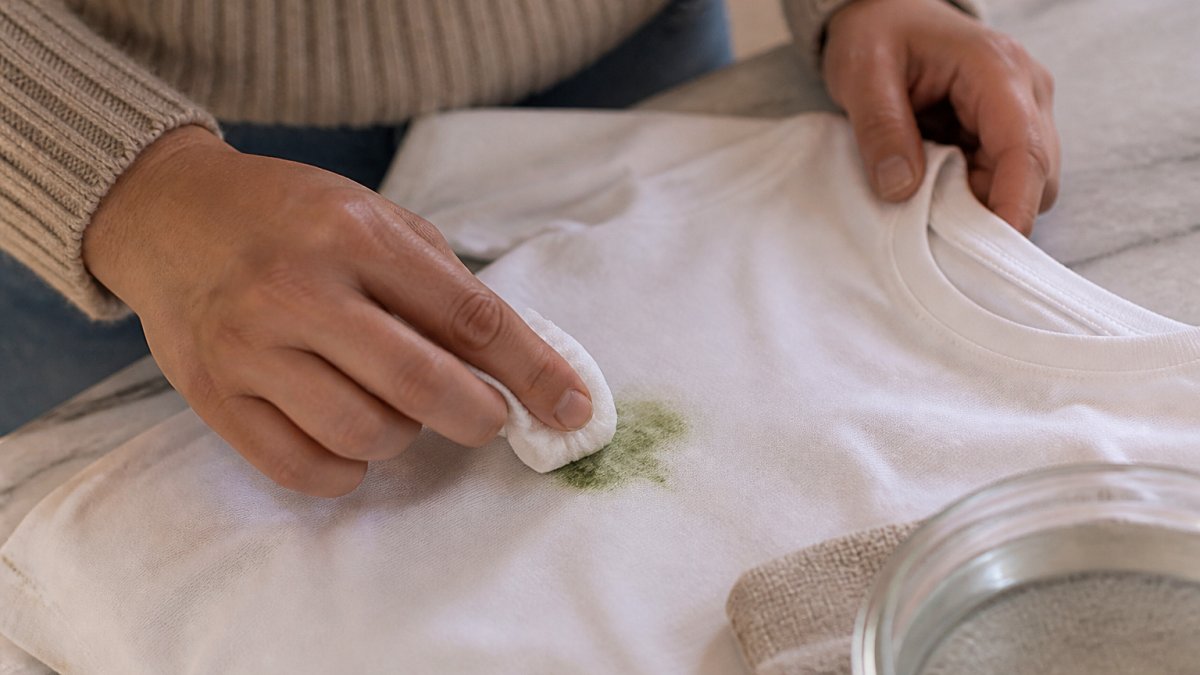
The first step is the most important: blot the stain instead of rubbing it. Rubbing pushes the stain deeper and spreads it; blotting lifts it away.
Use a clean white cloth or paper towel and press gently with a dabbing motion, working from the outside edges toward the center. Switch to a clean section of cloth as it picks up green.
Repeat this blotting action 5-10 times. You'll see the cloth pick up green residue with each dab. Stop when no more color transfers to the cloth.
Step 2: Rinse With Cold Water
After blotting, rinse the stained area with cold water, hot water can set plant-based stains permanently.
Hold the garment under cold running water, letting it flow through the stained area from the back of the fabric to push the stain out rather than deeper in. Rinse for 30-60 seconds.
You can also use a spray bottle filled with cold water if you don't have running water available. Spray the stain and let the water drip through the fabric onto a clean cloth underneath.
Step 3: Apply a Stain Remover
Once you've rinsed away the loose grass material, apply a stain remover designed for toddler clothes, reading the product instructions first.
Apply a dime-sized amount directly to the damp stain, work it in gently with your fingers or a soft cloth, and let it sit 5-10 minutes.
If you don't have a commercial stain remover, liquid laundry detergent works well for fresh grass stains. Dilute it slightly with water to create a paste, then apply the same way.
Step 4: Pre-Treat and Wait
Pre-treating gives the stain remover time to break down the chlorophyll.
Let the stain remover sit for 15-30 minutes; for fresh stains, 15 is often enough. Check the product label for the recommended time.
Keep the treated area damp during this time. If it starts to dry, spray it lightly with cold water. A damp stain responds better to treatment than a dry one.
Step 5: Wash According to Care Label
After pre-treatment, wash the garment according to the care label, using cold water, not hot.
Place the garment in the washing machine with similar colors, add your regular detergent, and wash on the appropriate cycle for the fabric type.
For delicate toddler garments, use a gentle cycle. For sturdy cotton clothes, a regular cycle works fine. The key is using cold water throughout.
Step 6: Check Before Drying
Always check the stain before putting the garment in the dryer.
Remove the garment and examine the stained area in good light. If the stain is gone, proceed to drying; if any green remains, repeat steps 3-5 first.
Heat from the dryer sets stains permanently, and once dried, removal becomes much harder. Thirty seconds of checking saves hours of frustration.
How to Remove Set-In Grass Stains From Clothes
Set-in stains are tougher because the chlorophyll has bonded more deeply to the fabric fibers, usually after at least one wash cycle and sometimes a dryer cycle.
Set-in grass stains require more aggressive treatment than fresh stains. Expect 30-60 minutes of active treatment time, plus overnight soaking.
Process for set-in stains:
Start by soaking the garment in cold water mixed with stain remover. Fill a bucket or sink with cold water, add stain remover per package directions, and submerge the stained area completely.
Let it soak at least 2-4 hours, or overnight for stubborn stains, so the treatment penetrates deeper into the fabric.
After soaking, gently rub the stained area with your fingers or a soft cloth or soft-bristled brush. Avoid aggressive scrubbing, which damages delicate toddler fabrics.
Rinse thoroughly with cold water. Repeat the soaking and gentle rubbing process if the stain remains. Many set-in stains require 2-3 treatment cycles.
Once the stain fades significantly, wash the garment normally in cold water. Check the stain again before drying.
Best Stain Remover for Toddler Clothes: Safe Ingredient Guide
Choosing the right stain remover for toddler clothes means balancing effectiveness with safety, your toddler's skin touches the fabric every day.
Enzyme-based stain removers work well on grass stains because enzymes break down plant proteins and chlorophyll. They're gentler than bleach-based options and work best on organic stains like grass, food, and dirt.
Plant-based stain removers use natural ingredients like citric acid or plant extracts to lift stains, a good choice for parents concerned about chemical exposure. Effectiveness varies, but many work well on fresh grass stains.
Oxygen-based cleaners are safer than chlorine bleach for toddler clothes, releasing oxygen molecules that break down stains without bleach's harshness. They work on most stain types and won't damage colored fabrics.
Avoid these ingredients for toddler clothes:
- Chlorine bleach (too harsh for sensitive skin)
- Phosphates (can irritate skin)
- Optical brighteners (unnecessary and potentially irritating)
- Heavy perfumes and dyes (common allergens)
Always test a new product on a hidden area first: apply a small amount to an inside seam or back corner, wait 10 minutes, and rinse.
Read product labels carefully. Look for phrases like "gentle," "hypoallergenic," or "safe for sensitive skin."
How to Wash Toddler Clothes With Stains: Complete Laundry Process
Washing stained toddler clothes requires attention to detail: remove the stain without damaging the garment or leaving residue that irritates skin.
Complete washing process:
Start with a pre-wash inspection. Check the stain under good light. Determine if it's fresh or set-in. This determines your treatment approach.
Load the washing machine with similar colors and fabric types.
Use cold water for every wash cycle. Hot water can set grass stains permanently.
Add your regular detergent in the amount recommended for the load size; extra detergent doesn't help and can leave residue on sensitive skin.
Select the appropriate cycle: delicate for fine fabrics and embellished pieces, regular for sturdy cotton and blends.
Run a complete wash cycle. Don't interrupt or remove the garment early.
Remove the garment and check the stain immediately in natural light.
Air-dry whenever possible. Hang the garment on a clothesline or lay it flat on a clean surface.
If you must use a dryer, use the lowest heat setting.
Fabric-Specific Care: Delicate and Colored Toddler Garments
Different fabrics require different stain removal approaches. What works on sturdy cotton might damage delicate knits or fade colored garments.
Cotton and cotton blends are forgiving and tolerate most stain treatments, including enzyme-based removers and moderate scrubbing.
Wool and wool blends need gentler handling: use cool water, avoid aggressive scrubbing or wringing, follow enzyme-remover instructions carefully, and air-dry flat to prevent stretching.
Knit fabrics like jersey and interlock need gentle handling: avoid excessive stretching, use cool water and gentle rubbing motions, and air-dry flat to maintain shape.
Colored garments need cold water and hidden-area testing to prevent fading, since some products lighten or change colors.
White and light-colored garments allow stronger products and more aggressive techniques, but avoid bleach-based products on all toddler clothes.
Embellished garments with buttons, sequins, or appliqués need care: avoid scrubbing near decorations, hand-wash if possible, and air-dry to protect them.
Always check the care label before treating any stain, manufacturer instructions take priority over general guidelines.
Common Mistakes to Avoid When Treating Grass Stains
Understanding what not to do prevents many stain removal failures.
Mistake 1: Using hot water
Hot water is the enemy of grass stains, heat bonds chlorophyll permanently to fabric fibers.
Mistake 2: Rubbing or scrubbing fresh stains
Rubbing spreads the stain and pushes it deeper. Blotting is always better, gentle dabbing lifts the stain away.
Mistake 3: Drying before checking the stain
Heat sets stains permanently, and many parents think a stain is gone after washing only to find it still there after drying.
Mistake 4: Mixing cleaning products
Combining stain removers, or mixing one with bleach, can create harmful fumes, damage fabric, or worsen the stain.
Mistake 5: Waiting too long to treat
The longer a grass stain sits, the harder it becomes to remove.
Mistake 6: Using the wrong water temperature in the dryer
Even with cold-water washing, high dryer heat can set remaining stains.
Mistake 7: Ignoring the care label
The care label provides important fabric-safety information, and following it prevents damage.
Mistake 8: Applying too much stain remover
More product doesn't mean better results, excess stain remover leaves residue that can irritate sensitive skin.
Grass stains on toddler clothes don't have to mean the end of a favorite outfit.
Frequently Asked Questions
What is the best way to remove grass stains from kids' clothes?
Act quickly by blotting the stain with a clean cloth, then rinse with cold water. Apply a toddler-safe stain remover or laundry detergent, let it sit for 10-15 minutes, and wash according to the garment's care label. For fresh stains, this method works best. Always check the stain before drying, heat can set the stain permanently.
Should you use hot or cold water on grass stains?
Always use cold water for grass stains. Hot water can set the stain by opening fabric fibers and allowing the stain to bond more deeply. Cold water helps rinse away the stain without causing damage. Once the stain is gone, you can wash the garment in warm or hot water if the care label allows.
How do you remove old, set-in grass stains from clothing?
For stains that have already been washed or dried, soak the garment in a solution of cold water and a toddler-safe stain remover for 30 minutes to several hours. Then apply the stain remover directly to the stain, gently rub, and wash. You may need to repeat this process 2-3 times for stubborn, aged stains.
Can you use dish soap to remove grass stains?
Dish soap can work for fresh grass stains in a pinch, but it's not ideal for toddler clothes because residue can irritate sensitive skin and may not rinse out completely. A gentle, toddler-safe laundry detergent or dedicated stain remover is safer and more effective. Always rinse thoroughly if you do use dish soap.