

Table of Contents
- Why Toddler Sizing Varies So Much Between Brands
- How to Measure a Toddler for Clothes at Home
- Reading a Toddler Height and Weight Size Chart Correctly
- Size Up or Size Down: A Practical Decision Framework
- Fabric, Sensory Needs, and Hand-Me-Down Sizing Logic
- Best Non Toxic Baby Clothing Brands and What to Look For
- Building a Sizing System That Works All Year
- Frequently Asked Questions
Last Updated: September 11, 2026
Why Toddler Sizing Varies So Much Between Brands
Toddler sizing means matching a child's body measurements to a garment's actual dimensions rather than an age label. It varies between brands because the United States has no enforceable standard for children's clothing sizes, so each company builds its own fit guide around its own patterns.
That explains almost every frustrating fitting room moment: one brand's 3T hangs loose while another's barely closes. The label says the same thing; the garment does not.
Below, we show you how to find consistent toddler sizing across brands using your child's real measurements instead of guesswork.
How to Measure a Toddler for Clothes at Home
Measuring a toddler takes about five minutes with a soft measuring tape and a flat wall. Take height standing, then chest, waist, and hip over light clothing, and trace the foot on paper for shoe size.
Timing matters more than technique. Try right after a nap or a meal, when your child is calm and willing to stand still. A wiggling toddler produces numbers you will regret trusting.
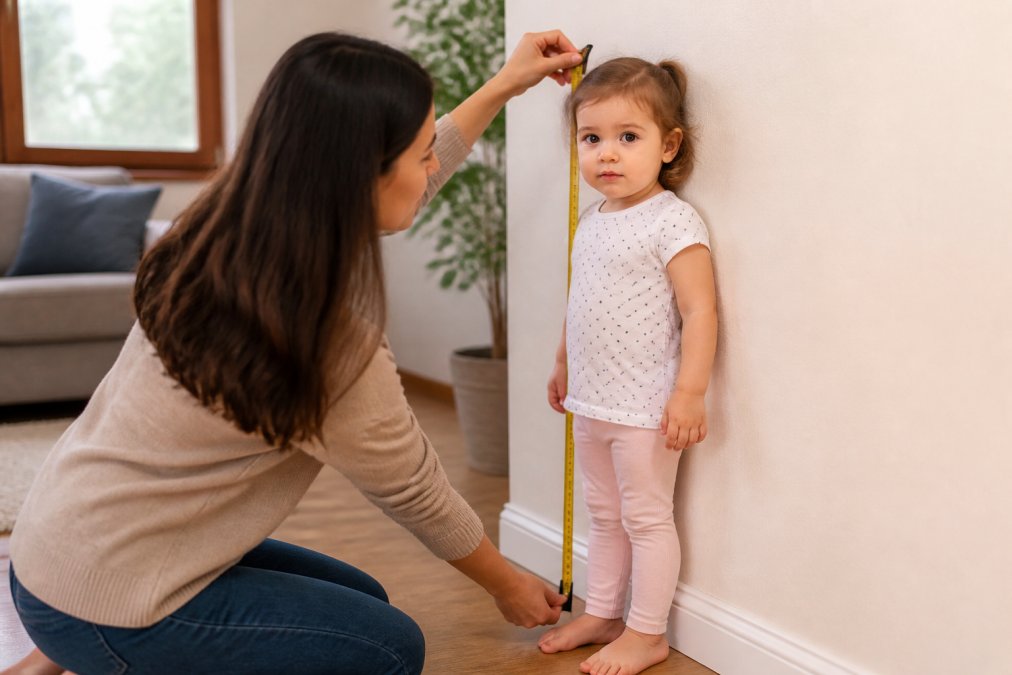
Measuring Height, Weight, and Foot Length
- Height: Stand your child against a flat wall, heels together, head level. Mark the wall at the crown and measure from the floor up.
- Weight: Use a digital scale, ideally in the morning, and record it in pounds.
- Chest: Wrap the tape around the fullest part of the chest, under the arms, keeping it level.
- Waist: Measure at the natural waistline, above the hip bone, without pulling the tape tight.
- Hip: Measure around the fullest part of the seat.
- Foot length: Have your child stand on paper, trace the outline, and measure from the longest toe to the heel.
A common mistake is measuring over bulky clothing, which adds phantom inches and leads to garments that swallow your child.
Reading a Toddler Height and Weight Size Chart Correctly
A toddler height and weight size chart works only when you read the garment measurements column, not just the age range. Most charts list age, body measurements, and finished garment dimensions, and the third column tells you whether the item will actually fit.
Here is how the common toddler sizes break down in practice:
Size |
Typical Age Range |
Typical Height |
Typical Weight |
|---|---|---|---|
2T |
2 years |
33-35 inches |
28-30 lbs |
3T |
3 years |
36-38 inches |
31-34 lbs |
4T |
4 years |
39-41 inches |
35-38 lbs |
These ranges are conventions, not rules. Children grow on wildly different timelines: a tall two-year-old may need a 3T while a petite three-year-old swims in it.
2T vs. 3T vs. 4T: What the Numbers Actually Mean
The difference between 2T, 3T, and 4T is roughly one inch of height and two to three pounds per step, with one exception: 2T is often cut with extra room for a diaper, while 3T and 4T are slimmer through the seat.
So a child who has just potty trained may suddenly fit better in a 3T than a 2T of the same nominal size, and the same child can wear a 3T in one brand and a 4T in another without either label being wrong.
Size Up or Size Down: A Practical Decision Framework
Size up when a garment's finished chest or waist measurement sits within about half an inch of your child's body measurement; size down when your child falls at the bottom of a range and the fabric has meaningful stretch. The decision is about the gap between the body number and the garment number, not the letter on the tag.
Start with the brand's finished garment measurements, not the age range. These describe the actual cut fabric: chest width seam-to-seam, body length from high point of shoulder to hem, waist relaxed and stretched, and inseam. Compare those to your child's numbers for a real answer instead of a guess.
The Half-Inch Rule and Why It Works
A garment needs roughly half an inch to one inch of ease at the chest and waist for a comfortable knit fit, and one to two inches for a woven button-down or layering piece. With no ease, the item pulls at the armpits and rides up; past about three inches over your child's chest, the shoulders slide and the neckline gapes.
That is why the same child can wear a 3T in one brand and a 4T in another without either label being wrong: a slim-cut 3T may show a finished chest of 21 inches, while a relaxed-cut 4T may show 23. Both are labeled correctly for their own pattern block.
Size Up When
- Your child's height is above the midpoint of the brand's stated range for that size.
- The item is a layering piece, a fleece, a puffer, a rain shell, worn over another shirt.
- The garment is 100% cotton woven with no spandex, because it will not stretch to accommodate a growth spurt.
- The item is a one-piece sleeper or romper, where torso length drives fit more than chest or waist.
- Your child is between sizes and the item is a staple you will rebuy, not a one-off.
Size Down When
- Your child falls at the bottom of the range and the fabric contains spandex or elastane at 3% or higher.
- The garment is a knit legging, jogger, or ribbed tee that is designed to hug.
- The item is a dress or tunic where extra length reads as oversized rather than intentional.
- You are buying a swimsuit, which relaxes in water and stretches with wear.
Growth Spurts and the Six-Week Reality
Toddlers commonly gain about an inch of height and one to two pounds in a short window, and growth clusters rather than staying linear. A size that fits perfectly today may last roughly six weeks before the shoulders pull and the sleeves ride, which is why the half-inch rule is a floor, not a target.
When to Skip the Purchase Entirely
If a brand does not publish finished garment measurements and the item is final sale, skip it. Reviews saying "runs small" or "runs large" signal that the pattern block does not match the label, and without numbers you are guessing.
Fabric, Sensory Needs, and Hand-Me-Down Sizing Logic
Fabric composition changes fit more than most parents expect, and no size chart captures it. A 100% cotton 3T and a polyester-blend 3T from the same label can fit like two different sizes after a few washes, because the fibers behave differently under heat, water, and wear.
How Fiber Content Changes the Same Size
- 100% cotton knits: Relax with wear and shrink with heat. A cotton tee can lose roughly 3% to 5% of its length in a hot wash and hot dry cycle, which is often the difference between a 3T and a 2T in the torso.
- Cotton-spandex blends (typically 95/5): Hold shape better and stretch back, so they fit closer to the labeled size and tolerate a growth spurt.
- Polyester and polyester-cotton blends: Resist shrinkage and hold color, but offer less give, so a snug fit stays snug.
- Rayon and modal: Soft and drapey, but prone to relaxing and growing slightly with wear, then snapping back after washing.
- Wool and wool blends: Minimal stretch, prone to felting if washed hot, and best sized with room to layer.
A practical rule: if the fiber content lists cotton at 100% with no spandex, size up half a size or plan to wash cold and dry low. If spandex appears at 3% or higher, the garment will forgive a slightly snug fit.
Sensory-Friendly Sizing: Fit Is the Feature
For children with sensory processing sensitivities, fit and fabric matter together, and the wrong combination causes more resistance than color or style ever will. Tight waistbands, thick seams, scratchy tags, and stiff denim are common triggers; soft, tagless construction and smooth knits make dressing easier for everyone.
A few concrete adjustments help:
- Waistbands: Look for flat, covered elastic or a wide soft band rather than a narrow gathered elastic. A waistband that leaves a red mark after an hour is too tight, even if the size chart says it fits.
- Seams: Flatlock or coverstitch seams lie flatter than standard serged seams and reduce the ridge against skin.
- Tags: Tagless prints or tear-away tags eliminate the neck scratch that drives many toddlers to refuse a shirt.
- Fabric hand: Brushed cotton, jersey knit, and bamboo blends feel smoother than canvas, corduroy, or stiff denim.
- Fit preference: Some children prefer a loose, roomy fit and will tolerate a size up; others prefer a close fit with no extra fabric to bunch. There is no universal answer, watch which garments your child reaches for and buy more of that fit.
Hand-Me-Down Sizing Logic: Measure, Don't Trust the Tag
Hand-me-downs follow their own logic. A garment washed dozens of times has already shrunk and relaxed to its final dimensions, so a used 3T often fits closer to a true 3T than it did new, but the tag is now unreliable, since the item may have shrunk a full size or been stretched out.
Evaluate used items by measuring the garment, not reading the label:
- Lay the garment flat and smooth it without pulling.
- Measure chest width seam-to-seam just below the armholes, then double it for the full chest circumference.
- Measure body length from the high point of shoulder to the hem.
- Measure waist relaxed and stretched for pants, and inseam from crotch seam to hem.
- Compare those numbers to your child's current measurements plus the half-inch to one-inch ease rule.
If a hand-me-down's finished chest measures within an inch of your child's chest plus ease, keep it; if it is more than two inches short, it is already too small regardless of the tag. Sort by numbers, not labels, and you will stop storing clothes that will never fit.
Best Non Toxic Baby Clothing Brands and What to Look For
The best non toxic baby clothing brands share three traits: published fabric content, clear garment measurements, and verifiable certifications. Look for labels that name the material and any safety testing, and treat vague phrases like "premium cotton" as a signal to dig further.
When you evaluate any brand, check for:
- Fabric transparency: The exact fiber content, listed as percentages.
- Certifications: Recognized third-party textile safety certifications, such as OEKO-TEX Standard 100, which tests for harmful substances in textiles.
- Garment measurements: A children's clothing size guide from the Consumer Product Safety Commission style approach that publishes finished dimensions, not just age labels.
- Return policy: Clear, easy exchanges, especially for gifts where you do not know the exact size.
For parents comparing options, the American Academy of Pediatrics guidance on children's clothing and skin is a useful reference on fabric and skin sensitivity. We recommend looking for brands that publish garment measurements on every listing for exactly this reason, so you can compare numbers across brands instead of guessing at letters.
Building a Sizing System That Works All Year
A workable sizing system is a running record, not a one-time measurement. Keep a note on your phone with your child's current height, weight, chest, waist, hip, and foot length, and update it every few months or after a growth spurt.
Then follow a simple routine:
- Re-measure at the start of each season.
- Save the size chart and garment measurements for brands you buy repeatedly.
- Note which brands run small or large for your child specifically.
- Shop sales with the next size up in mind, not the current one.
This is how you stop rebuying the same mistake. The CDC growth charts for children can help you track whether your child is trending along a steady curve, which tells you roughly how much growth room to plan for.
Frequently Asked Questions
Should I buy 2T or 3T for a 2 year old?
Most 2 year olds fit 2T, but toddler sizing depends on height and weight, not age. Check the brand's size chart: if your child is near the top of the 2T height range or wears 2T pants that leave no room at the waist, choose 3T. If they are petite, stay in 2T. Buying one size up only makes sense when the chart's measurements, not the birthday, point there.
Why does toddler sizing vary so much between brands?
There is no standardized sizing for toddler clothing in the U.S., so each brand builds its own fit guide around its own patterns and target customer. A 3T from one label can measure like a 2T from another. Regional differences, fabric stretch, and relaxed versus slim cuts add more variation. Always compare your child's body measurements to the specific brand-specific size chart before ordering.
How do I measure my toddler for clothing without a meltdown?
Measure during a calm moment, standing up, with a soft measuring tape. Record height from the top of the head to the floor, chest at the fullest point, waist at the natural crease, and inseam from the crotch to the ankle. For feet, trace the foot on paper and add a thumb's width of growth room. Write the numbers down once and reuse them for every order.
How often should I re-measure my toddler?
Every eight to twelve weeks works well for most toddlers, and always before a seasonal wardrobe refresh. Growth spurts can add a full size in a few months, so measurements from spring may be outdated by fall. Keep a note on your phone with height, weight, and foot length, and update it after each checkup to keep your sizing accurate.