

Table of Contents
- Why Clothes That Grow With Kids Matter
- How to Measure Kids for Clothes Accurately
- Key Features That Allow Clothes to Grow With Kids
- Choosing the Right Fabrics for Durability and Longevity
- How to Build a Capsule Wardrobe for Kids
- Best Non-Toxic Baby Clothing Brands to Consider
- Maintenance and Care for Maximum Garment Longevity
- Maximizing Cost-Per-Wear Through Smart Shopping
- Frequently Asked Questions
Last Updated: October 1, 2026
Why Clothes That Grow With Kids Matter
Kids outgrow clothes quickly, making frequent replacements costly and wasteful. Clothes that grow with kids extend the wearing life of each piece, reduce replacement cycles, and allow room for movement and play. At Tots & Trends by Morgan, we offer practical solutions that balance style and quality. A $50 jacket worn for two years beats a $20 jacket worn for three months, the durability, adjustable features, and thoughtful design make the difference in cost-per-wear.
How to Measure Kids for Clothes Accurately
Accurate measurements are essential for finding clothes that fit and have room to grow.
Taking Accurate Measurements at Home
Measure your child in lightweight clothing using a soft measuring tape while standing straight but relaxed.
Record these key measurements:
- Chest: Measure around the fullest part of the chest, keeping the tape snug but not tight
- Waist: Measure at the natural waist, where your child's body naturally bends
- Inseam: Have your child stand barefoot with legs straight. Measure from the inner thigh down to the ankle
- Length: Measure from the shoulder down to the wrist with arms at rest
- Sleeve length: Measure from the shoulder to the wrist with arms extended
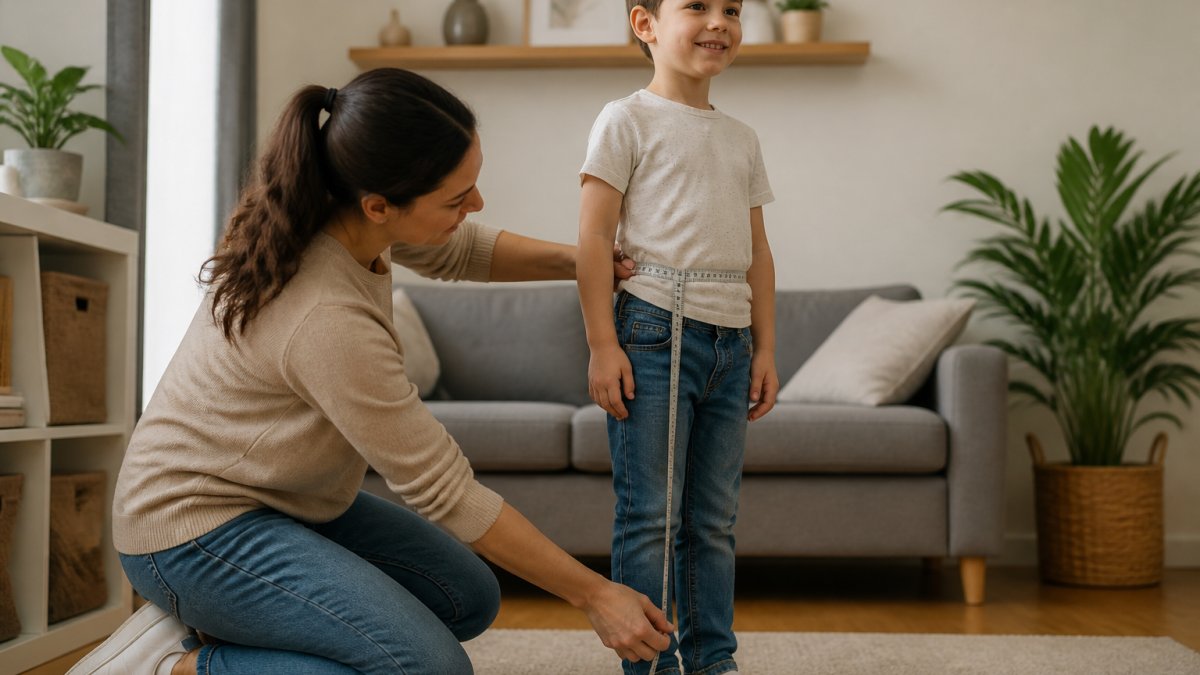
Track measurements every 2-3 months in a simple chart to spot growth patterns and plan ahead.
Understanding Size Charts and Growth Room
Size charts vary between brands, so always check the specific brand's chart. When choosing clothes that grow with kids, add 1-2 inches to chest and waist, 0.5-1 inch to length and sleeves, and 1-1.5 inches to pants inseam. This buffer keeps clothes comfortable without looking oversized while extending wearability.
Key Features That Allow Clothes to Grow With Kids
Not all clothes are built to accommodate growth. The best pieces include specific design elements that extend their usable lifespan.
Adjustable Waistbands and Expandable Designs
Adjustable waistbands with buttons, snaps, or drawstrings let you customize fit as your child grows. The Adidas Kids' 2-Piece Set features an elastic waistband that moves with your child without pinching. Some brands build seams with extra fabric that can be let out as needed, adding months of wear to each piece.
Stretch Fabrics and Elasticity for Mobility
Stretch fabrics move with your child's body and accommodate growth without feeling tight. Look for blends with spandex or elastane, the Lands' End Kids' 4-Piece Set uses 55% cotton, 39% polyester, and 6% spandex for comfort, durability, and stretch. The right blend provides natural feel plus flexibility, recovering better after washing to maintain shape through growth phases.
Rolled Cuffs and Hem Adjustments
Rolled cuffs can be adjusted as your child grows, then unrolled to add length. The Eddie Bauer Youth 3-in-1 Jacket uses this approach, extending the jacket's lifespan by a full size or more. Adjustable hems for pants and dresses work similarly, providing 1-2 extra inches of length as your child grows.

Choosing the Right Fabrics for Durability and Longevity
The fabric you choose determines how long clothes last through active play, repeated washing, and growth phases. Understanding fiber properties and how they interact with care practices is essential for maximizing garment lifespan.
Fiber Composition and Durability Trade-offs
Cotton is soft and breathable. Polyester is durable and shape-retaining. Blends combine the best qualities, the Lands' End Kids' 4-Piece Set uses 55% cotton, 39% polyester, and 6% spandex, engineered for active kids.

Fabric Weight and Its Role in Longevity
Fabric weight (measured in GSM) affects durability. Check product descriptions for GSM, or feel the fabric, midweight pieces have substance without stiffness.
Care Requirements and Durability Impact
Check care labels before buying. Machine-washable in cold water on low heat is ideal for kids' clothes and extends garment life. Hand-wash-only or dry-clean-only pieces are impractical for active kids. Choose fabrics with simple care instructions for maximum longevity and ease of maintenance.
Pilling, Pilling Resistance, and Fabric Quality
Pilling reduces garment lifespan. Minimize pilling by washing inside out on a gentle cycle, avoiding fabric softener, and air drying. Use a fabric shaver to remove pills.
How to Build a Capsule Wardrobe for Kids
A capsule wardrobe is a small collection of versatile pieces that mix and match endlessly. Start with neutral colors (white, gray, navy, black, tan) and add 2-3 accent colors your child loves.
Mix and Match Essentials for Multiple Outfits
Essential pieces include plain t-shirts, solid pants or leggings, jeans, a sweater, a lightweight jacket, and one dressier piece. Each should work with multiple others to maximize outfit combinations. Quality matters, one well-made piece worn 50 times beats five cheap pieces worn 10 times each.
Layering Techniques for Seasonal Transitions
Layering extends wearing seasons. Build a three-tier system: base layer (fitted t-shirts), mid layer (sweaters, cardigans), and outer layer (coats, windbreakers). The Eddie Bauer Youth 3-in-1 Jacket with removable fleece liner adapts to temperature changes, extending usefulness from fall through spring. This approach means buying fewer pieces while getting more wear from each.
Eddie Bauer Youth 3-in-1 Jacket, Small to Large →
Best Non-Toxic Baby Clothing Brands to Consider
When shopping for clothes that grow with kids, prioritize brands with natural fabrics, non-toxic dyes, and thoughtful construction. Tots & Trends by Morgan curates pieces like the Lands' End Kids' 4-Piece Set (cotton-rich blends), Adidas Kids' 2-Piece Set (elastic waistband for active kids), and Oversized Unisex Graphic Hoodie (cotton and recycled polyester with room for growth). Look for brands that list fabric composition clearly and read parent reviews about durability after multiple washes.

Maintenance and Care for Maximum Garment Longevity
How you care for clothes determines how long they last through growth phases. Proper washing, storage, and repair can add months or even years to a garment's lifespan, turning a $40 piece into a true multi-year investment.
Washing Practices That Preserve Elasticity and Shape
Wash inside out to protect colors and reduce stress on elastic. Use cold water to preserve elasticity and prevent shrinkage. Choose a gentle cycle to reduce stress on seams and elastic. Avoid bleach and fabric softener, which weaken fibers. Wash darks separately from lights to prevent fading.
Drying Methods and Elastic Preservation
Air dry whenever possible. If using a dryer, use low heat only and remove clothes while slightly damp. Never use high heat. Hang dry or lay flat delicate pieces like sweaters and graphics to prevent stretching.
Strategic Storage and Organization
How you store clothes affects their lifespan and your ability to pass them down.
Organize by size, not age: As your child grows out of clothes, move them to a separate storage area labeled by size. This system makes it simple to find pieces your child has grown into (useful if growth is uneven, one child may skip a size while another doesn't). It also makes passing clothes to younger siblings or donating them straightforward.
Store in a dry, cool place: Humidity causes mildew, odors, and fabric degradation. A closet or dresser in a climate-controlled room is ideal. Avoid basements or attics where temperature and humidity fluctuate. If storing clothes for extended periods (off-season or for younger siblings), use breathable storage bags, not plastic bins, which trap moisture.
Fold rather than hang: Hanging stretches knits and can cause permanent shoulder divots. Fold most pieces, especially t-shirts, sweaters, and leggings.
Repair and Reinforcement for Extended Lifespan
Small repairs done immediately prevent major damage.
Address loose seams immediately: A loose seam at a pocket, armhole, or inseam is easy to fix with a needle and thread. Left alone, it becomes a torn garment that's no longer wearable. Check seams monthly and reinforce any that are starting to separate.
Seasonal Care and Rotation
Rotating clothes seasonally reduces wear and extends lifespan.
Rotate between seasons: Don't wash and store winter coats in summer. Instead, rotate them out of active use. This reduces the number of wash cycles per year and gives fabrics time to rest.
Maximizing Cost-Per-Wear Through Smart Shopping
Cost-per-wear is the true measure of value. A $60 outfit worn 100 times costs 60 cents per wear. A $20 outfit worn 10 times costs $2 per wear.
Frequently Asked Questions
What features should I look for in clothes that grow with kids?
Look for adjustable waistbands with elastic or drawstring closures, stretch fabrics with spandex or polyester blends, and rolled cuffs or hems that can be lengthened as your child grows. Garments with multiple size options within one style, like the Eddie Bauer Youth 3-in-1 Jacket (XS to XL), also extend wearability. These features allow a single piece to work through multiple growth phases, increasing its clothing lifecycle and overall value.
How do I determine the right size for growing children?
Measure your child's chest, waist, and inseam at home using a soft measuring tape. Compare these measurements to the brand's size chart, then select a size that allows 1-2 inches of extra room for growth. Check the model's height on the listing to match your child's proportions. For rapid growth phases, choose the larger size if your child is between sizes, ensuring the garment will fit for longer.
Is it worth investing in clothes that grow with your child?
Yes. While individual pieces like the Adidas Kids' 2-Piece Set ($52) may cost more upfront, clothes designed with adjustable features and quality durable textiles reduce the need for frequent replacements. When you calculate cost-per-wear across multiple growth phases, these garments often cost less than buying new outfits every few months. Quality fabrics and expandable designs also hold up better in the wash, maintaining their appearance longer.
What fabrics are best for long-lasting children's clothing?
Cotton blends with polyester offer breathability and durability, while spandex or elastane provides stretch for active toddler mobility and ease of movement. Mid-weight polyester resists pilling and maintains shape through multiple washes. The Lands' End Kids' 4-Piece Set combines these with 60% cotton tops and spandex leggings, balancing comfort, textile resilience, and practical washability for everyday wear.
Choosing clothes that grow with kids requires attention to fit, fabric, and construction. The right pieces extend beyond a single season, reduce waste, and give you real value for your investment. At Tots & Trends by Morgan, we believe that quality children's clothing should be both stylish and practical. Shop our curated selection of pieces designed with growth in mind, and dress your child in outfits that last through every milestone and growth phase.