

Table of Contents
- Why Fall Requires Different Toddler Shoe Choices
- How to Measure Toddler Feet for Shoes at Home
- How Should Toddler Shoes Fit Properly
- Best Shoes for Toddlers in Fall: Styles and Features
- Using a Toddler Shoe Size Chart to Find the Right Fit
- Materials That Support Healthy Foot Development
- Common Mistakes to Avoid When Choosing Fall Shoes
- Caring for Fall Footwear: Keep Shoes Lasting Through the Season
- Frequently Asked Questions
Last Updated: October 7, 2026
Why Fall Requires Different Toddler Shoe Choices
Learning how to choose comfortable toddler shoes for fall starts when you understand how the right footwear changes with the seasons.
Fall shoes need to do more than summer sandals. They protect against moisture, provide traction on wet surfaces, and keep little feet warm during cooler mornings and afternoons. The materials matter. The closure system matters.
This guide walks you through every step of selecting fall footwear that keeps your toddler comfortable, protected, and stylish as the season changes.
How to Measure Toddler Feet for Shoes at Home
Getting the right size starts with an accurate measurement. Many parents skip this step and rely on their toddler's last shoe size, a mistake that leads to poor fit and discomfort.
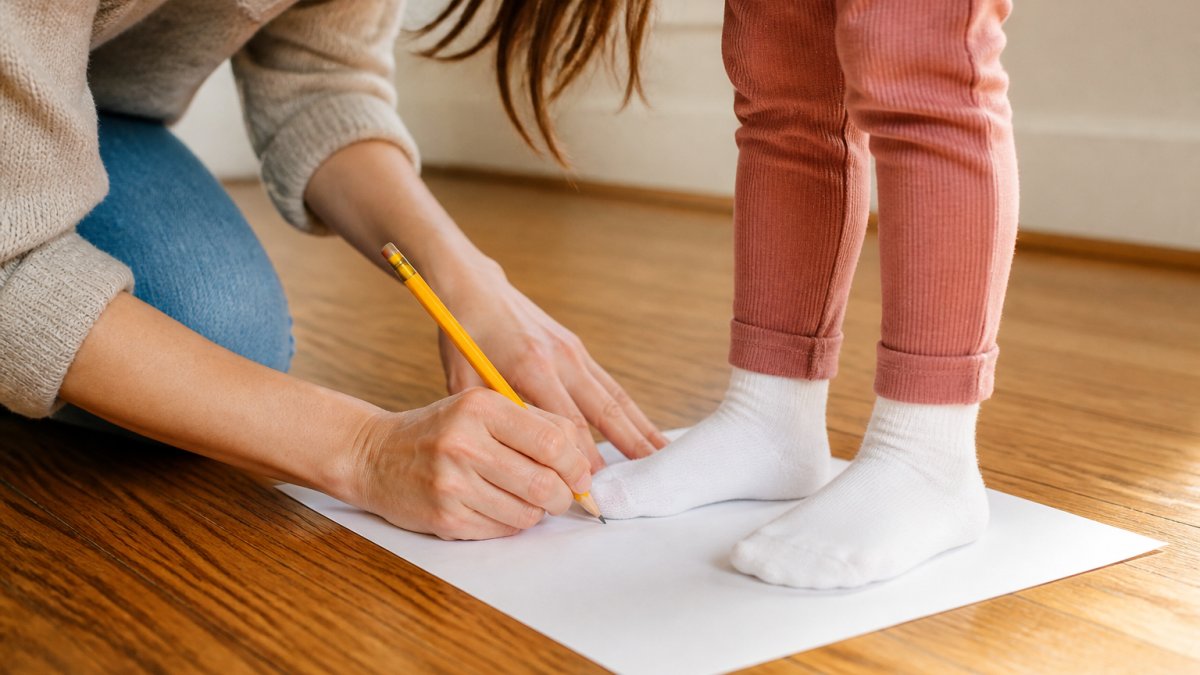
What You'll Need
Gather these simple items before you start:
- One sheet of white paper
- A pencil or pen
- A ruler or measuring tape
- Your toddler in socks (the same thickness they'll wear with fall shoes)
Step-by-Step Measuring Process
Step 3: Mark the heel and longest toe. Use your pencil to mark where the heel touches the paper.
Step 4: Measure the distance. Use your ruler to measure from the heel mark to the toe mark.
Step 5: Repeat for the other foot. Toddler feet are rarely identical. Measure the second foot and record that number too.
Step 6: Add a half-inch buffer. This accounts for growth and allows room for socks and movement.
How Should Toddler Shoes Fit Properly
Proper fit prevents blisters, supports healthy development, and keeps your toddler comfortable throughout the day. Many parents buy shoes too tight (thinking their child will "grow into them") or too loose (assuming extra space is safe). Both are wrong.
The Thumb Test and Heel Fit
The thumb test is your quickest check. With your toddler wearing the shoe, slide one thumb into the space behind the heel.
Heel fit matters more than most parents realize. The back of the shoe should grip the heel without slipping. When your toddler walks, their heel shouldn't slide up and down inside the shoe.
Check the heel fit by having your toddler walk a few steps. Watch from behind. If the shoe shifts side to side on their heel, it's too loose.
Signs Your Toddler's Shoes Are Too Tight or Too Loose
Too tight:
- Your toddler complains of pain or refuses to wear the shoes
- Red marks appear on the skin after wearing them
- The shoe's sides press visibly into the foot
- Your toddler walks differently, limping, shuffling, or favoring one foot
- Toenails show pressure marks or discoloration
Too loose:
- Your toddler's heel slips when they walk or run
- They trip more frequently than usual
- The shoe slides side to side on their foot
- Your toddler complains the shoe feels "funny" or "wobbly"
- They kick the shoe off repeatedly
Best Shoes for Toddlers in Fall: Styles and Features
Fall weather demands specific footwear types. Different activities call for different shoes, and the season's moisture and temperature swings shape what works best.
Boots for Wet Weather and Puddle Play
Boots are fall's essential footwear. They cover the ankle, protect against water splash, and provide better traction on wet leaves and muddy ground than sneakers.
Look for boots with these features:
- Waterproof or water-resistant material that sheds moisture without feeling stiff
- Flexible soles that bend naturally when your toddler walks (stiff soles cause fatigue and blisters)
- Good traction with a textured sole pattern that grips wet surfaces
- Ankle support without being so rigid that it restricts movement
- Easy closures like hook-and-loop fasteners that parents and toddlers can manage quickly
Rubber or synthetic materials work better than suede or leather for fall boots. They dry faster and handle puddles without absorbing water. Many quality children's boots combine waterproof outer materials with breathable inner linings that prevent sweat buildup.
Sneakers for Active Play and School
Sneakers remain essential for toddlers who attend school or spend time in indoor play environments. Fall sneakers should have the same fit standards as other shoes, proper heel grip, room for toe movement, and supportive soles.
For fall, choose sneakers with:
- Durable canvas or synthetic uppers that handle outdoor wear
- Closed toes and heels for protection against cooler temperatures
- Cushioned insoles that absorb impact during active play
- Breathable materials that prevent sweat and moisture buildup
- Reinforced stitching at stress points (heel, toe, sides)
Sneakers with hook-and-loop closures are easier for toddlers to put on independently, though lace-up sneakers with elastic laces work well too if parents handle the fastening.
Water-Resistant Materials and Durable Construction
Material choice determines how long your toddler's shoes last and how well they handle fall's moisture.
Water-resistant materials:
- Synthetic blends that repel water without feeling plastic
- Treated canvas that resists moisture penetration
- Rubber or neoprene that sheds water completely
- Sealed seams that prevent water from seeping through stitching
Durable construction features:
- Double-stitched seams that withstand repeated wear and washing
- Reinforced toe boxes that resist scuffing and impact
- Quality sole adhesive that doesn't separate after getting wet
- Flexible materials that don't crack or stiffen when wet
Fall means your toddler's shoes get dirtier and wetter than in other seasons. Quality construction means they survive the season without falling apart.
Using a Toddler Shoe Size Chart to Find the Right Fit
Toddler shoe sizes vary dramatically between brands. A size 7 from one manufacturer might fit very differently than a size 7 from another.
Understanding Size Variability Across Brands
This variability exists because children's shoe manufacturers don't follow a universal standard. One brand's size 7 might be designed for a foot length of 4.5 inches, while another brand's size 7 targets 4.75 inches.
Some brands run narrow, others run wide. Some prioritize length over width, others the reverse.
This is why your home measurement matters more than the size number on the box. When you know your toddler's actual foot length, you can cross-reference it against individual brand sizing charts.
When to Remeasure and Size Up
Toddler feet grow quickly. Many parents remeasure every 2-3 months during the growing years, though growth rates vary.
Signs it's time to remeasure:
- Your toddler complains that shoes feel tight
- You can no longer fit your thumb in the heel space
- Red marks appear on the foot after wearing shoes
- Your toddler walks differently than usual
- You notice their toes pressing against the shoe's end
When you remeasure and find growth, size up immediately. Don't wait for obvious discomfort, tight shoes slow growth and cause pain.
| Measurement Check | Frequency | Action |
|---|---|---|
| Initial foot measurement | Before buying | Record in inches |
| Remeasure after purchase | 2-3 months | Compare to original |
| Check fit during wear | Weekly | Watch for red marks |
| Full remeasure if tight | As needed | Size up immediately |
Materials That Support Healthy Foot Development
Your toddler's feet are still developing. The bones are softer, the arches are forming, and the muscles are strengthening. Shoe materials directly affect how this development happens.
Flexible Soles and Breathable Fabrics
Flexible soles let your toddler's feet move naturally. Rigid soles force unnatural positioning and can slow development. Look for shoes where you can easily bend the sole by hand, if it barely flexes, it's too stiff for a toddler.
Breathable fabrics prevent moisture buildup that causes blisters and fungal issues. Materials like canvas, mesh, and quality synthetics allow air circulation. Waterproof doesn't mean non-breathable, many modern water-resistant shoes use breathable membranes that shed moisture while letting sweat escape.
Adjustable Closures for Easy On and Off
Hook-and-loop fasteners (like Velcro) let your toddler help put shoes on and take them off. This independence builds confidence and motor skills. Laces work too, but they're harder for toddlers to manage independently.
Adjustable closures also accommodate swelling. A toddler's feet swell slightly during the day and when they're active. Adjustable closures let you loosen the shoe slightly without removing it, maintaining comfort throughout the day.
Avoid shoes with fixed, non-adjustable closures that can't adapt to your toddler's changing foot size and swelling patterns.
Common Mistakes to Avoid When Choosing Fall Shoes
Parents make predictable errors when selecting toddler footwear. Knowing these mistakes helps you avoid them.
Buying too large. "They'll grow into it" is the most common mistake.
Ignoring water resistance. Fall means wet conditions.
Skipping the measurement step. Eyeballing a size or using your toddler's last shoe size leads to poor fit.
Selecting shoes with stiff, inflexible soles. These look sturdy but actually harm developing feet by preventing natural movement.
Caring for Fall Footwear: Keep Shoes Lasting Through the Season
Fall shoes take a beating. Mud, water, wet leaves, and repeated wearing demand proper care to extend their life.
After wet play:
- Remove excess mud by wiping on grass or a doormat
- Stuff the shoe with newspaper to absorb moisture
- Change the newspaper every few hours until the shoe is dry
- Never use direct heat like a radiator or hair dryer, it damages materials and breaks adhesives
Weekly cleaning:
- Wipe the exterior with a damp cloth to remove dirt
- Use a soft brush on textured soles to clear debris
- Air dry completely before wearing again
Storage between seasons:
- Clean thoroughly and dry completely
- Store in a cool, dry place away from direct sunlight
- Stuff with tissue paper to maintain shape
- Keep in a breathable bag, not plastic (plastic traps moisture)
Proper care means your toddler's fall shoes stay comfortable and functional through November and into early winter.
Choosing the right footwear for your toddler in fall requires attention to fit, materials, and seasonal needs. The process takes time, but it prevents blisters, supports healthy development, and keeps your child comfortable through changing weather.
Frequently Asked Questions
How much room should toddler shoes have at the toes?
Toddler shoes should have about a thumb's width of space between the longest toe and the shoe's end. This allows room for growth and movement without creating excess space that causes slipping. Press gently on the toe box while your child wears the shoe to confirm you can fit your thumb comfortably. Too much space causes tripping and blisters; too little restricts healthy foot development. Proper fit prevents discomfort and supports natural movement during active play.
How often should you measure a toddler's feet?
Measure your toddler's feet every 2-3 months, or whenever they outgrow shoes faster than expected. Toddlers' feet grow rapidly, sometimes up to a full size in a few months. Check for signs of outgrowth: complaints of tightness, toe crowding visible in the shoe, or reluctance to wear previously comfortable footwear. Remeasure before each seasonal shoe purchase, especially when transitioning to fall and winter footwear. Regular measurement prevents wearing shoes that restrict growth and ensures consistent comfort.
Should toddlers wear boots or sneakers in fall?
Both serve different purposes in fall. Boots with water-resistant material protect against wet leaves, rain, and puddles common in autumn weather. Sneakers offer flexibility and breathability for active play and school days. Many parents choose boots for outdoor adventures and sneakers for everyday wear. Consider your toddler's daily activities: if they spend time in wet conditions, boots are essential. If they're mostly indoors or in dry settings, sneakers provide comfort and support. Having both options lets you match footwear to the day's weather and activities.
What materials work best for toddler fall shoes?
Look for water-resistant or waterproof outer materials like treated leather, synthetic blends, or rubber to handle fall moisture. Insides should feature breathable lining to prevent sweat and odor buildup. Flexible rubber soles support natural foot movement and grip on wet surfaces. Soft, cushioned footbeds reduce impact during active play. Avoid stiff, heavy shoes that restrict movement or cause blisters. Quality materials that balance protection and flexibility ensure your toddler stays comfortable through puddle-jumping and outdoor adventures while supporting healthy foot development.