

Table of Contents
- Why Accurate Measurements Matter for Toddler Clothing
- Tools You'll Need for Measuring Your Toddler
- How to Measure Toddler Chest and Waist
- Measuring Height and Inseam Length
- Toddler Clothing Size Chart and Age-Based Sizing
- Tips for Measuring a Wiggly Toddler
- Best Non-Toxic Baby Clothing Brands to Consider
- Common Mistakes to Avoid When Measuring
- Frequently Asked Questions
Last Updated: September 1, 2026
Why Accurate Measurements Matter for Toddler Clothing
Getting the fit right matters more than most parents realize. Accurate measurements ensure comfortable outfits, fewer returns, and better value for your investment. Toddlers grow unpredictably, and poor measurements lead to clothes that are either too loose or too tight within weeks, sitting unworn in the closet.
Accurate measurements are essential when shopping online, where you can't feel fabric or see how garments drape. Age-based sizing alone often disappoints because growth charts vary wildly between brands, what one company calls a 2T fits completely differently from another brand's version. When you know your child's actual body measurements, you have real data instead of guessing.
At Tots & Trends by Morgan, we understand that parents want their children dressed in special, fashionable outfits that actually fit well. Taking the time to measure toddlers for clothes properly transforms the entire shopping experience: you make confident decisions, reduce returns, and find pieces that work for your child's actual body.
Tools You'll Need for Measuring Your Toddler
A soft fabric tape measure is the gold standard, it's gentle against skin and flexible enough to wrap smoothly around curves. You can find these at any fabric or craft store for just a few dollars. Paper and pen matter too; write down each measurement with the date to track growth over time and prevent remeasuring frustration.
A flat wall or doorframe provides a reliable surface for height measurements. Optional but helpful: a ruler or straightedge assists with marking height, and a soft string works as a backup if you don't have a fabric tape measure, wrap it around the measurement point, mark the overlap, then measure the string against a ruler.
How to Measure Toddler Chest and Waist
Measuring Chest Circumference
Chest circumference determines whether a shirt will fit comfortably across the shoulders and torso. Have your toddler stand still and relaxed, then wrap the soft measuring tape around the fullest part of the chest, just under the armpits and across the shoulder blades. The tape should sit snugly but not tight, you should slip one finger under comfortably.
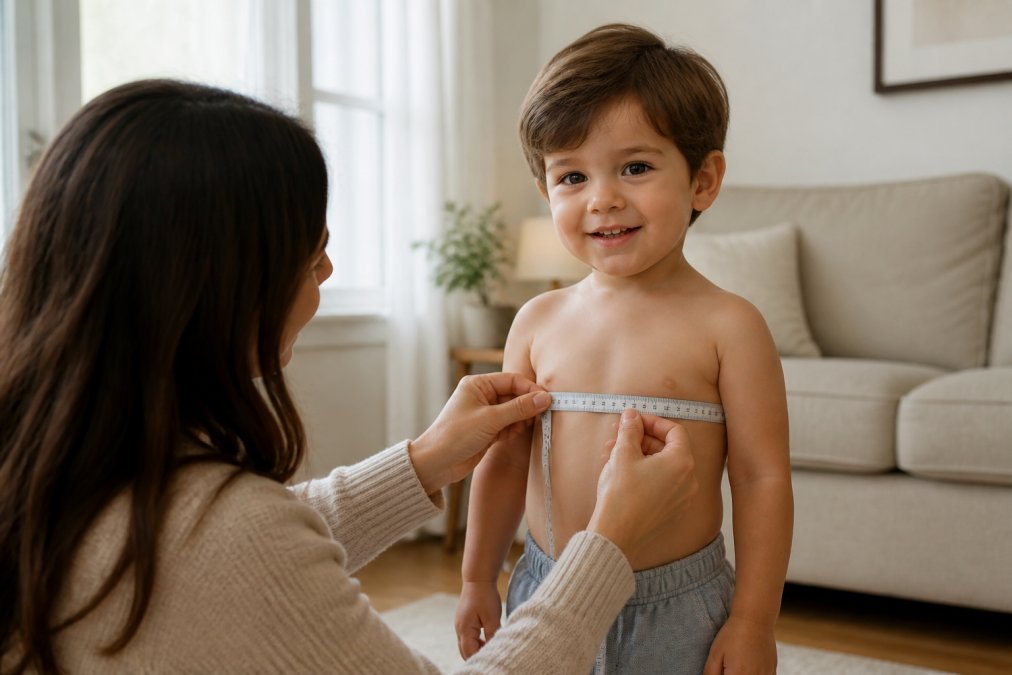
Position the tape parallel to the ground directly under the armpits, not near the neck or down at the ribs. Write down the measurement in inches, converting from centimeters if needed.
Measuring Waist Circumference
Waist measurement matters for pants, skirts, and any garment with elastic or a waistband. Find the narrowest part of your toddler's torso, usually just above the belly button, and wrap the soft measuring tape around it, keeping it parallel to the ground. This measurement is especially important for online purchases, even half an inch off can make a garment unwearable during active play.
Measuring Height and Inseam Length
For height, have your toddler stand barefoot with their back against a wall, standing as tall as possible without rising on their toes. Position a ruler horizontally at the top of their head and mark where it meets the wall. Measure from the floor to the mark.
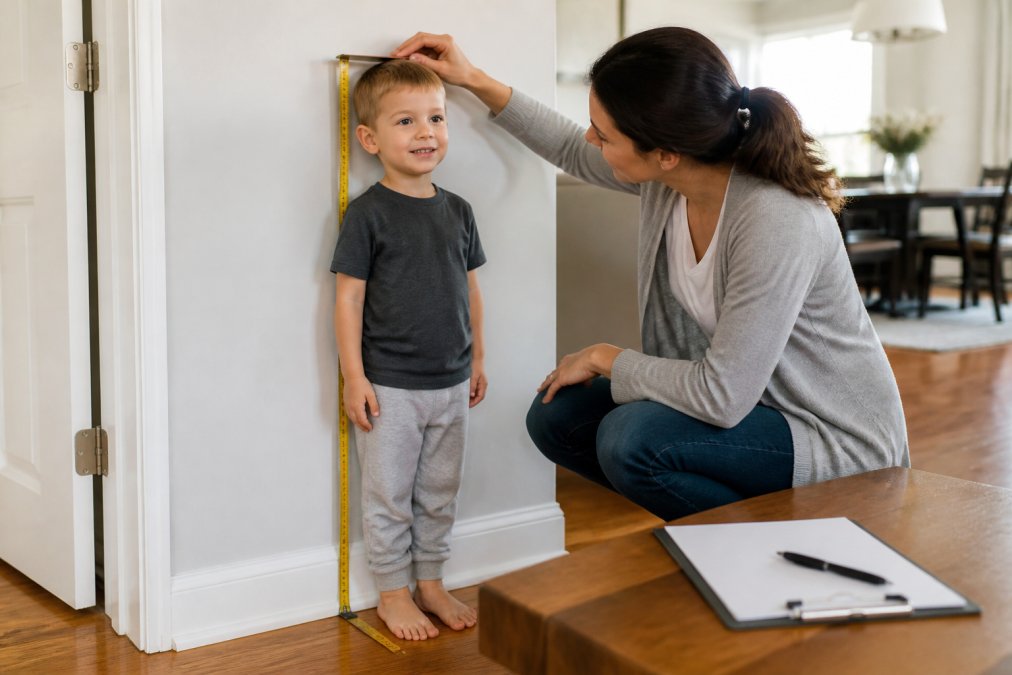
Inseam is the inside leg measurement from the crotch seam to the ankle bone. Have your toddler stand with legs slightly apart and measure along the inside seam where pants would sit. This determines whether pants hit at the ankle or bunch at the shoes, one of the most common fit problems with online children's clothing.
Toddler Clothing Size Chart and Age-Based Sizing
Size charts vary dramatically between brands. What one company calls a 2T might fit completely differently from another brand's version. This is why actual body measurements matter more than age-based sizing alone.
Most toddler clothing brands use these general age guidelines as starting points, not rules:
Age Range |
Typical Size |
Chest (inches) |
Waist (inches) |
Height (inches) |
|---|---|---|---|---|
12-18 months |
12M-18M |
19-20 |
18-19 |
28-32 |
18-24 months |
18M-2T |
20-21 |
19-20 |
32-36 |
2-3 years |
2T-3T |
21-22 |
20-21 |
36-40 |
3-4 years |
3T-4T |
22-23 |
21-22 |
40-44 |
Growth spurts are unpredictable, your child might wear 2T comfortably for six months, then need 3T within two months. Measuring every few months keeps you ahead of growth. Many toddlers don't follow average growth patterns, so using actual measurements gives you sizing that matches your specific child.
When shopping online, always cross-reference your child's measurements against the brand's specific size chart. Don't assume that because your child wears a 2T at one retailer, they'll wear a 2T everywhere. The size chart is your truth source.
Tips for Measuring a Wiggly Toddler
Make measuring a game by framing it as something fun, tell your toddler you're checking how much they've grown or taking measurements for a special outfit. Measure when they're calm, usually mid-morning or after a snack. Use distraction strategically: have someone else in the room with a toy or snack while you quickly wrap the tape and get a reading.
Dress them in light clothing to avoid throwing off measurements, and take multiple readings for each point, use the middle number as your official measurement. Be quick, as toddlers have short attention spans. Positioning yourself behind your toddler for chest and waist measurements sometimes makes it easier to keep the tape in place.
Best Non-Toxic Baby Clothing Brands to Consider
When investing in quality pieces for your toddler, the brand matters. Tots & Trends by Morgan curates clothing that blends style, quality, and comfort for every memorable moment. Our carefully selected pieces are designed for both everyday wear and special occasions, ensuring your toddler is dressed in fashionable, high-quality outfits that parents actually feel good about buying. We understand that parents want pieces that hold up to real life, active play, and multiple washes while still looking intentional and on-trend.
When evaluating any brand, look at fabric content first. Natural fibers like organic cotton, linen, and wool are gentler on sensitive skin than synthetic blends. Check whether the brand discloses manufacturing practices and material sourcing. Read reviews from other parents, focusing on fit feedback rather than general impressions, comments like "runs small" or "the fabric softened after washing" are more useful than "cute design." Consider the price-to-durability ratio; mid-range brands frequently offer the best balance of quality and value for everyday toddler wear.
Common Mistakes to Avoid When Measuring
The most common mistake is pulling the tape too tight. "Snug" doesn't mean "compressed", remember that one finger should slide under the tape comfortably. Another frequent error is measuring in different clothing each time; consistency matters for comparable measurements.
Many parents measure only once and assume they have the number right. Taking two or three readings and using the middle number is more reliable. Ignoring growth is another trap, toddlers grow constantly and unpredictably. Remeasure every two to three months or before making a major clothing purchase. Keep a simple record with dates so you can track growth patterns.
Getting the fit right starts with accurate measurements. When you measure toddlers for clothes properly, you set yourself up for better shopping decisions, fewer returns, and clothes that actually work for your child's body. At Tots & Trends by Morgan, we believe that every child deserves to wear special, fashionable pieces that fit well and feel comfortable. Use the measurement techniques in this guide, reference size charts carefully, and shop with confidence knowing you have real data backing your decisions. Start measuring today, and you'll see the difference in how your toddler's clothes fit and perform through active play and growth.
Frequently Asked Questions
Q: Does a 2 year old wear 2T or 3T?
A: Most 2-year-olds wear size 2T, but growth varies significantly. Take your toddler's actual chest circumference, waist, and height measurements rather than relying solely on age. A 2T typically fits children with a chest circumference of 20-21 inches and height around 32-36 inches. If your child is taller or has a larger frame, 3T may fit better. Always check the size chart for the specific brand, as sizing inconsistencies exist across manufacturers.
Q: What are the most important measurements for toddler clothing?
A: The three critical measurements for toddler clothing are chest circumference, waist measurement, and inseam length. Chest circumference determines overall garment width and how snug the fit will be. Waist measurement affects how pants and skirts sit. Inseam length ensures pants reach the correct ankle position and prevents tripping hazards. Height is also useful for age-based sizing reference, but actual body measurements are more reliable than age alone for ensuring proper fit.
Q: How do I know if my toddler needs a larger size?
A: Signs your toddler needs a larger size include clothing that feels snug around the chest or waist, pants that are too short in the inseam (more than 1-2 inches above the ankle), and sleeves that don't reach the wrist. If your child's measurements now fall in the upper range of their current size or have moved into the lower range of the next size up, it's time to size up. Growth spurts are common, so remeasure every 3-4 months or before purchasing new items.
Q: How do I measure my toddler without a fabric tape measure?
A: If you don't have a fabric tape measure, use a soft string or ribbon to wrap around your child's chest and waist, then measure the string against a ruler or measuring tape. For height, have your child stand barefoot against a wall and use a book or ruler to mark the wall at the top of their head, then measure from the floor to the mark. For inseam, measure from the inner thigh to the ankle along the leg. While a fabric tape measure is ideal for accuracy, these alternatives work well for basic measurements.