

Table of Contents
- What Makes High Quality Kids Clothes Worth the Price
- Best Fabrics for Active Kids: Natural Fibers, GSM, and Breathability
- How to Check Garment Construction Quality Before You Buy
- Everyday Play Clothes for Active Kids: What Holds Up in the Wash
- Chemical Safety, Non-Toxic Dyes, and Sensitive Skin
- Growth-Friendly Design, Repairability, and Second-Hand Quality Assessment
- How to Spot High Quality Kids Clothes When Shopping Online
- Conclusion
Last Updated: August 27, 2026
What Makes High Quality Kids Clothes Worth the Price
High quality kids clothes are built to withstand repeated washing, active play, sensory-sensitive skin, and rapid growth. At Tots & Trends by Morgan, we evaluate children's clothing against all these criteria before anything reaches our shelves.
Yes, well-made children's garments cost more upfront, but they typically outlast two or three cheaper alternatives, especially when factoring in hand-me-down potential or resale value. The price gap comes down to four things: fiber quality, garment construction, finishing details, and chemical safety. Each has measurable, visible markers you can check before you buy.
Best Fabrics for Active Kids: Natural Fibers, GSM, and Breathability
The biggest mistake most parents make is judging fabric by how it feels in the store. Softness at purchase tells you almost nothing about how a fabric performs after twenty washes.
Organic Cotton, GOTS, and OEKO-TEX Certifications
Organic cotton is the most trusted natural fiber for children's clothing because it is breathable, hypoallergenic, and free from residual pesticides that conventional cotton can carry. For children with sensitive skin, the difference is often immediate.
Two certifications verify that a fabric's organic or safety claims are independently verified:
- GOTS (Global Organic Textile Standard) covers the entire supply chain from fiber to finished garment, including social and environmental criteria.
- OEKO-TEX Standard 100 certifies that a finished textile has been tested for harmful substances, including heavy metals, pesticides, and formaldehyde. As noted by the OEKO-TEX certification body's consumer guidance, it tests for over 100 harmful substances, making it one of the most comprehensive textile safety standards available.
Both certifications appear as labels on the garment or its packaging. If a brand claims non-toxic dyes or chemical safety without either mark, treat it as unverified.
Understanding Fabric Weight (GSM) for Kids' Clothing
GSM (grams per square meter) measures fabric density. Higher GSM means heavier, denser fabric; lower GSM means lighter and more breathable. The right GSM depends on the garment's purpose.
Garment Type |
Typical GSM Range |
Best For |
|---|---|---|
Summer tees and onesies |
120-160 GSM |
Hot weather, breathability |
Everyday playwear |
160-220 GSM |
Year-round versatility |
Midweight fleece jackets |
220-280 GSM |
Fall layering, mild cold |
Heavyweight outerwear |
280+ GSM |
Winter, wind and water resistance |
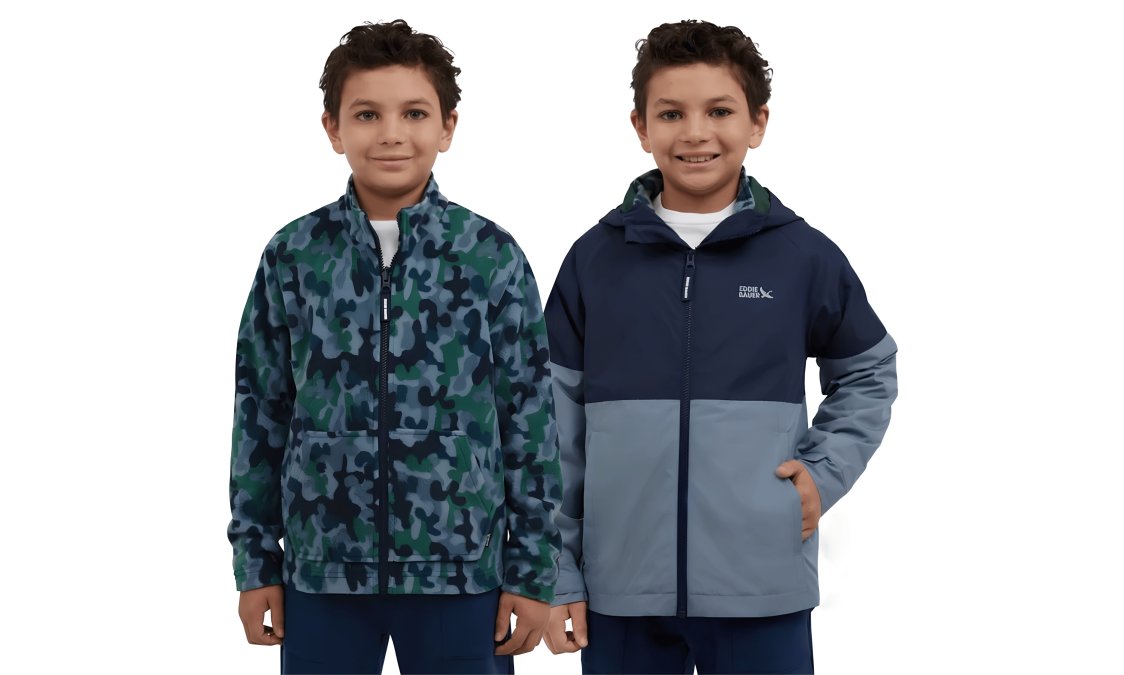
The Eddie Bauer Youth 3-in-1 Jacket available at Tots & Trends by Morgan lists its outer shell at approximately 96 GSM and inner fleece at approximately 250 GSM, illustrating how layered construction uses different fabric weights for different performance needs. Low GSM in a winter garment is a red flag; high GSM in a summer shirt means a hot, uncomfortable child.
How to Check Garment Construction Quality Before You Buy
Garment construction quality is the single most reliable predictor of how long a piece of kids' clothing will last. Premium fabric still falls apart at the seams if construction is poor.
Stitching, Seam Integrity, and Reinforced Stress Points
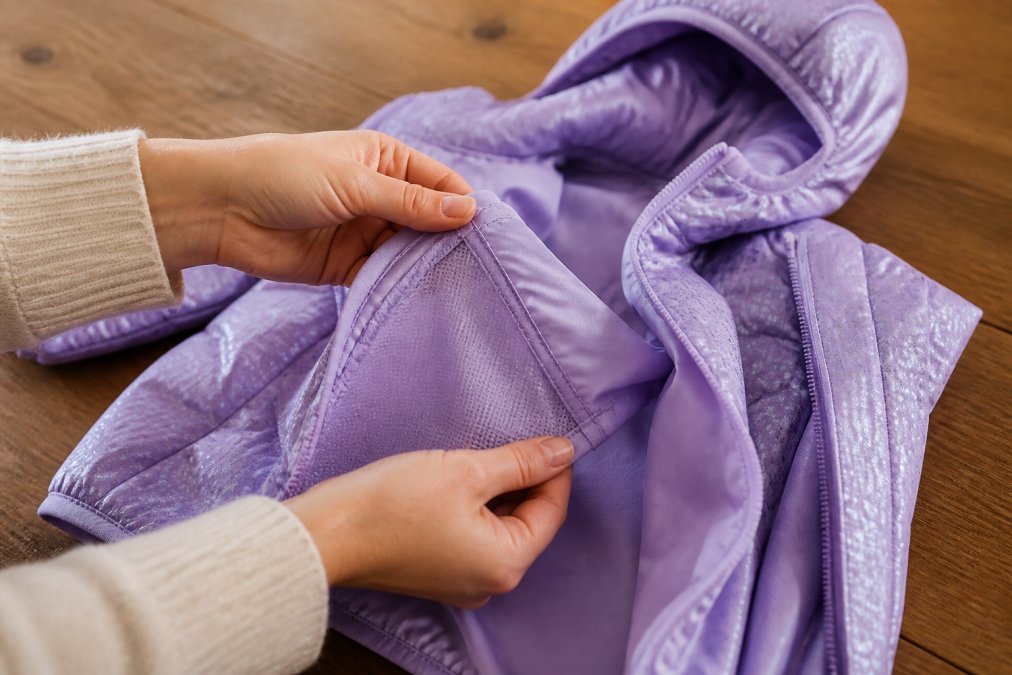
Turn the garment inside out. That is the single most useful thing you can do when assessing construction quality.
What to look for:
- Stitch density: More stitches per inch means greater seam integrity. Loose, widely spaced stitches unravel faster.
- Seam type: Flat-felled and double-stitched seams are stronger than single-stitch construction and lie flat against skin.
- Reinforced stress points: The crotch seam, shoulder seams, and pocket attachment points need reinforcement through bar tacking or double stitching.
- Pilling resistance: Rub the fabric between your fingers. If it balls up immediately, it will pill quickly in the wash.
Neckline Binding, Snap Durability, and Finishing Details
The neckline is one of the first places a children's garment fails. Quality neck binding lies flat, uses fabric with similar elasticity to the body, and is stitched with enough density to hold its shape through repeated laundering.
For infants and toddlers, snaps must be attached with reinforced backing fabric, aligned precisely, and made from metal rather than plastic where possible. Check whether appliqués or embroidered details are stitched through all fabric layers rather than iron-on.
Everyday Play Clothes for Active Kids: What Holds Up in the Wash
Everyday play clothes face specific demands: grass stains, food, mud, and machine washing on repeat. A garment's wash-fastness, how well it holds color, shape, and structure through repeated laundering, is the true test of quality.
Before buying any everyday piece, check the care label:
- Machine washable is non-negotiable for playwear.
- Cold wash recommended often indicates less stable dye, meaning potential color fading. Garments that handle warm washes generally have more durable color treatment.
- Tumble dry low or air dry: Quality natural fiber garments often recommend air drying to prevent shrinkage.
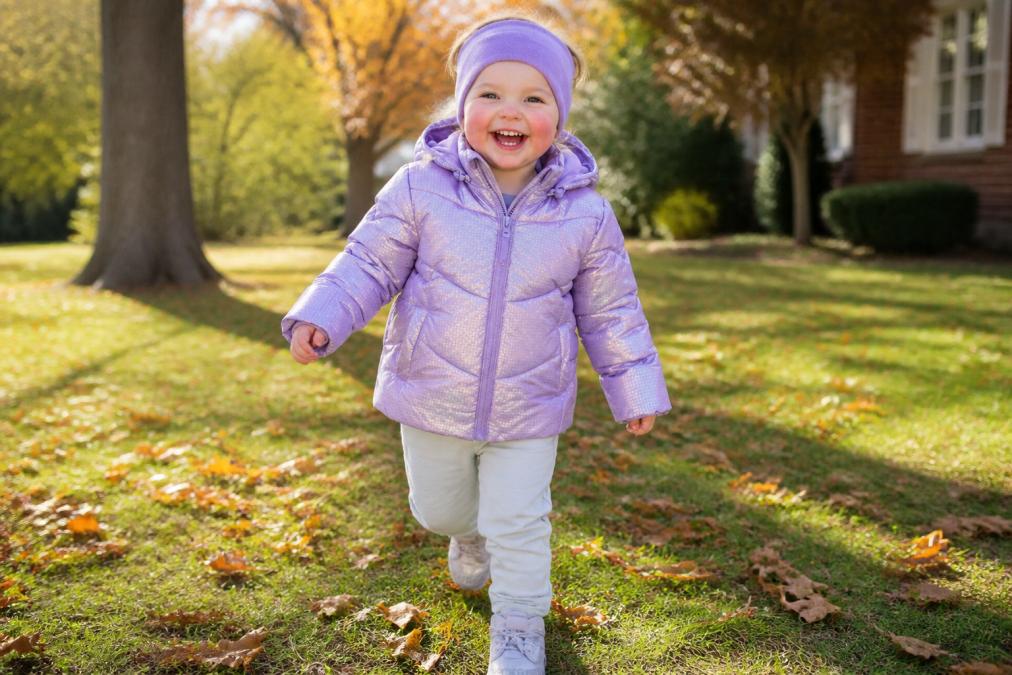
The Weather Tamer Iridescent Foil Puffer Jacket and Lands' End Kid's Full Zip Jacket, both available at Tots & Trends by Morgan, are machine washable. The Lands' End jacket specifies cold wash with like colors, a standard care instruction for polyester fleece that maintains fabric stability and color over time.

For active kids, look for fabric with elasticity in the construction, either through spandex blends or knit structures that allow free movement. The Spyder Youth Superlite Jacket uses 95% polyester and 5% spandex for this reason: it adds range of motion without sacrificing outer shell structure.
Chemical Safety, Non-Toxic Dyes, and Sensitive Skin
Children's skin is more permeable than adult skin, making chemical exposure through clothing a genuine concern. Main chemical risks come from residual pesticides in conventional cotton, azo dyes that break down into carcinogenic compounds, formaldehyde in wrinkle-resistant finishes, and heavy metals in some synthetic dyes.
The CPSC (Consumer Product Safety Commission) guidelines on children's textiles provide regulatory minimums for children's apparel sold in the United States. OEKO-TEX Standard 100 and GOTS certification exceed those minimums and are most trusted by parents seeking genuinely non-toxic options.
What to look for on the label:
- OEKO-TEX Standard 100 label with a certification number (verifiable on the OEKO-TEX website)
- GOTS certification logo
- "Non-toxic dyes" or "reactive dyes" without a certification number should be treated as unverified
For children with documented skin sensitivities, natural fibers like organic cotton and merino wool are generally better tolerated than synthetics, which trap heat and moisture more readily.
Growth-Friendly Design, Repairability, and Second-Hand Quality Assessment
Growth-friendly design is one of the most undervalued markers of quality in children's clothing. A garment designed with growth in mind typically includes adjustable waistbands, rolled hems that can be let down, and slightly generous proportions without sacrificing shoulder fit. These features extend wearable life significantly.
Repairability matters equally. High quality garments are worth repairing; disposable ones are not. When assessing whether a garment is worth mending, check if the fabric is dense enough to hold a patch, replacement buttons or snaps are available, and construction is straightforward enough for basic repairs. As the Sustainable Apparel Coalition's Higg Index framework documents, garment longevity is often more impactful than fiber sourcing alone.
Second-hand quality assessment follows the same checklist as new garment inspection, plus three additional checks:
- Examine stress points for early-stage fraying or thinning
- Check elastic waistbands and cuffs for loss of recovery
- Assess color fading: even fading suggests good dye quality; patchy fading suggests poor wash-fastness
A well-made second-hand garment at half price often offers better value than a new fast fashion piece at full price.
How to Spot High Quality Kids Clothes When Shopping Online
Shopping online requires a different inspection strategy. You cannot touch the fabric or check seams directly, so you need to know what to ask for and what to look for in product listings.
The most reliable signals:
- Fiber content is listed precisely: "100% organic cotton" or "95% polyester, 5% spandex" is a good sign. "Soft fabric blend" with no percentages is a red flag.
- GSM is specified: Any brand confident in their fabric weight will list it.
- Care instructions are detailed: Specific wash temperature, drying method, and bleach guidance reflect a brand that understands its materials.
- Certifications are named and verifiable: GOTS, OEKO-TEX, or CPSC compliance should be stated with enough detail to verify independently.
- Multiple interior photos are available: A brand showing inside seams, neck binding, and snap attachment is confident in construction quality.
When shopping at a curated boutique rather than a mass retailer, look for stores providing actual body measurements alongside age-based sizing. A chest measurement in inches anchors sizing in a way age-based labels cannot.
For outerwear, check whether the listing specifies shell GSM and lining GSM separately. The Eddie Bauer Youth 3-in-1 Jacket lists outer shell at approximately 96 GSM and inner fleece at approximately 250 GSM, giving a precise picture of performance. That level of specification marks a quality-focused product listing.
The American Academy of Pediatrics guidance on children's clothing safety is a useful reference for both chemical safety and physical safety considerations.
Quality Signal |
What to Look For |
Red Flag |
|---|---|---|
Fiber content |
Exact percentages listed |
Vague terms like "soft blend" |
Fabric weight |
GSM specified |
No weight information |
Certifications |
GOTS or OEKO-TEX with number |
Self-declared "non-toxic" only |
Construction |
Interior seam photos available |
Exterior-only product images |
Care instructions |
Specific wash temp and method |
"Hand wash only" for playwear |
Sizing |
Body measurements in cm/inches |
Age range only |
Identifying genuinely durable, safe, and well-constructed children's clothing takes practice, but becomes second nature once you know the markers. The fast fashion industry has made low-quality construction the default, so quality now requires active recognition. Tots & Trends by Morgan curates its selection with exactly these standards in mind, focusing on carefully selected pieces that combine on-trend style with construction quality that holds up to real childhood. Browse the current collection and find everyday wear and special occasion pieces built to last beyond a single season.
Frequently Asked Questions
Q: What fabric features indicate high-quality children's clothing?
A: High-quality children's clothing typically uses natural fibers like organic cotton or cotton blends with a GSM of at least 160-180 for everyday wear. Look for OEKO-TEX or GOTS certification on the label, which confirms the fabric is free from harmful chemicals. Fabrics should feel dense without being stiff, resist pilling after washing, and maintain their shape. Hypoallergenic and moisture-wicking properties are a bonus for kids with sensitive skin or active lifestyles.
Q: How can you tell if kids' clothes will withstand frequent washing?
A: Check the care label for machine-washable instructions and look for colorfast, wash-fastness indicators like 'color-safe' or OEKO-TEX certification. Tug gently at the seams before buying — they should not shift or pucker. Reinforced stress points at the knees, elbows, and underarms signal garment longevity. Fabrics with a tighter weave and higher GSM tend to shrink less and resist wear and tear better than lightweight, loosely woven materials.
Q: How do you distinguish between fast fashion and durable kids' clothing?
A: Fast fashion kids' clothes typically use low GSM fabrics, single-stitched seams, and screen-printed labels that crack after a few washes. Durable, slow-fashion alternatives feature double or triple stitching, woven or embroidered labels, natural or certified fiber content, and reinforced closures. The price point alone is not a reliable guide — inspect the construction details. A jacket with double-stitched seams and a water-resistant shell offers far better value for money than a piece that pills after three washes.
Q: My daughter has sensitive skin — what should I look for in kids' clothing fabrics?
A: Choose garments labeled OEKO-TEX Standard 100 or GOTS certified organic cotton. These certifications confirm the fabric has been tested for harmful substances including non-toxic dyes, heavy metals, and formaldehyde. Avoid synthetic-heavy blends with rough textures against the skin. Flat or covered seams reduce friction, and tagless or woven-in labeling methods prevent itching. Breathable natural fibers also reduce moisture buildup, which can trigger skin irritation during active play.