

Table of Contents
- What Makes Boutique Children Clothes Last Longer
- Durable Fabrics for Active Kids: What to Look For
- How to Care for Boutique Kids Clothes So They Last
- The Resale Value of Boutique Kids Clothing: Hand-Me-Down Economics
- Cost-Per-Wear: The Real Math Behind Boutique vs Fast Fashion
- Slow Fashion, Textile Waste, and Why Sustainable Consumption Pays Off
- Frequently Asked Questions
Last Updated: September 16, 2026
What Makes Boutique Children Clothes Last Longer
Boutique children clothes last longer because they are built from stronger natural fibers and assembled with construction methods that mass-market production skips. This guide from Tots & Trends by Morgan explains exactly what to look for, how to care for it, and why the math works in your favor. The short answer: better materials plus better stitching equals more wears, more hand-me-downs, and a lower true cost.
A common mistake parents make is judging a garment by how it feels on the hanger. Feel matters, but construction decides whether a piece survives its twentieth wash. Below, we break down the two factors that matter most.
Fabric Quality: Natural Fibers, Organic Cotton, and Fiber Strength
Fabric quality starts with fiber length. Longer fibers spin into stronger yarn, and stronger yarn resists pilling, thinning, and holes. Natural fibers like organic cotton and bamboo viscose generally hold their shape better through repeated laundering than short-staple synthetics, which is why fabric integrity is the first thing to check.
Run your hand along the inside of the garment. If you can see light through the knit, it will not survive an active toddler.
Garment Construction: Reinforced Seams and High-Quality Stitching
Garment construction is what separates heirloom quality from disposable clothing. Look for reinforced seams at stress points: shoulders, armholes, and the crotch. Flatlock or double-stitched seams distribute tension instead of concentrating it, which is why high-quality stitching outlasts single-stitch alternatives.
Flip the piece inside out before you buy. Finished seam edges and tight, even stitches signal a garment built for garment lifespan, not a single season.
Durable Fabrics for Active Kids: What to Look For
Durable fabrics for active kids share three traits: fiber strength, shrinkage resistance, and pilling prevention. Cotton-rich knits with a small percentage of stretch hold up well through crawling, climbing, and playground tumbles. Dense weaves beat loose ones every time.
What most guides miss is that weight matters more than label claims. A midweight knit with tight gauge resists abrasion far better than a thin, loosely knit fabric, even when both say "100% cotton."
How to Care for Boutique Kids Clothes So They Last
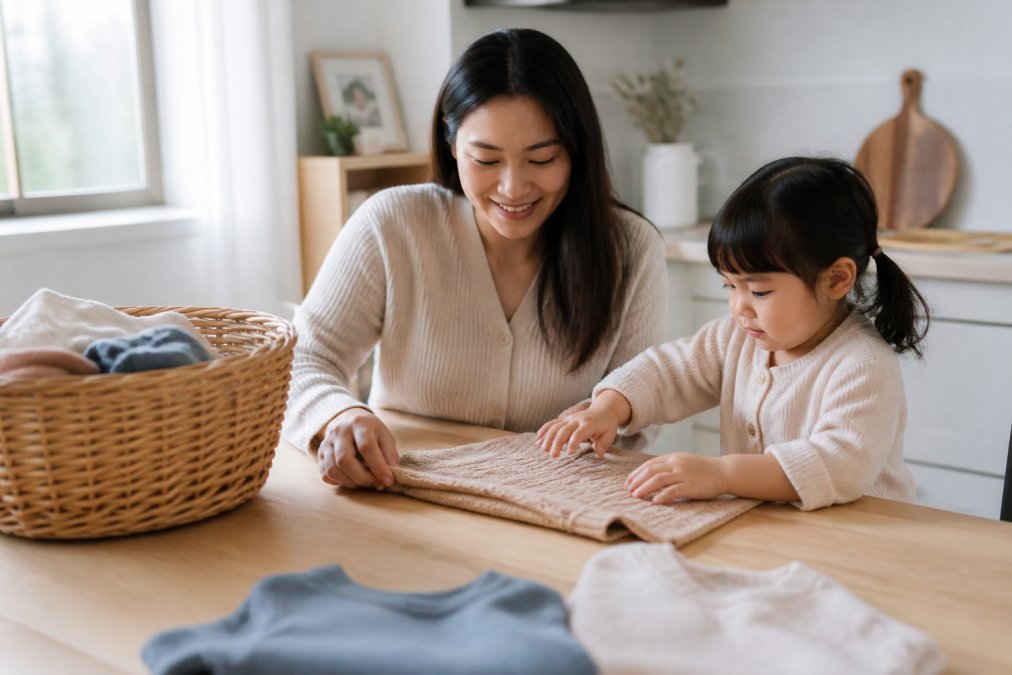
How to care for boutique kids clothes comes down to three habits: wash less often, wash cold on a delicate cycle, and air dry. Those three changes alone can meaningfully extend garment lifespan. But boutique pieces have two care considerations that mass-market guides skip entirely: they are often finished without the chemical treatments that make cheap fabric feel "easy," and they frequently include size-adjustability features that need to be maintained, not ignored.
Wash Frequency, Delicate Cycle, and Air Drying
Wash frequency drives wear more than any other factor. Unless a piece is visibly soiled, spot-clean it and air it out between wears. When you do wash, use cold water on a delicate cycle, turn garments inside out, and skip the dryer entirely. Air drying protects fiber strength and prevents the shrinkage that comes from high heat.
A common mistake is treating every item the same. Heavy play clothes can handle more frequent washing; delicate knits and special-occasion pieces cannot.
Chemical-Free Finishes: Why Boutique Fabric Behaves Differently in the Wash
Many mass-market children's garments are treated with resin finishes (often formaldehyde-based) to make fabric look wrinkle-free and crisp on the rack, and with optical brighteners to make whites look brighter than the fiber actually is. Those finishes sit on top of the fiber and wash out unevenly, which is why a cheap tee can look tired after a dozen washes even though the cotton itself is fine.
Boutique makers more often skip those finishes, which is better for a child's skin, the American Academy of Pediatrics has long advised parents to wash new clothing before wearing, partly to reduce exposure to residual finishing chemicals, but it also means the fabric will feel softer and less "crisp" from day one. That is not a defect. It is the absence of a coating.
Two practical consequences:
Weather Tamer Toddler and Little Girls →
- Do not use fabric softener. Softener leaves a waxy film that traps soil and reduces the absorbency of natural fibers. A half-cup of white vinegar in the rinse cycle does the same job without the residue.
- Skip chlorine bleach and oxygen "color-safe" bleach on organic cotton and bamboo viscose. Chlorine weakens cellulose fibers over time; oxygen bleaches can dull plant-dyed colors faster than the fiber wears out. For whites, a long cold soak with a mild detergent usually does more than bleach.
Size-Adjustability Features: The Longevity Feature Most Parents Ignore
One of the biggest reasons boutique pieces outlast fast-fashion equivalents is not the fabric, it is the grow-with-me design. Many boutique bottoms and dresses include features that let one garment fit a child across two or three size ranges:
- Adjustable waistbands, internal elastic with buttonhole slots, or a drawstring with a locking toggle. You move the button as the child grows instead of buying a new size.
- Rolled or fold-over cuffs on sleeves and pant legs, which add one to two inches of usable length.
- Convertible straps and extenders on rompers and overalls, which add length at the shoulder.
- Layered hems on dresses, where a second seam is already sewn in so the hem can be let down later.
These features only work if you maintain them. Check the elastic in adjustable waistbands every few months, if it has lost stretch, replacing a 50-cent piece of elastic is far cheaper than replacing the pants. Untie drawstrings before washing so they do not knot and pull through the casing. And when you store a piece for a younger sibling, loosen the adjustable waist to its largest setting so the elastic is not stored under tension.
Stain Removal for Delicate Boutique Fabrics
Stain removal on delicate boutique fabrics requires patience, not force. Blot, never rub. Rubbing pushes the stain deeper into the fiber and roughens the surface, which causes pilling.
For most food and drink stains, flush the area with cool water from the back of the fabric, then apply a small amount of mild liquid detergent and let it sit for a few minutes before rinsing. Avoid chlorine bleach, which weakens natural fibers over time. For grease, a drop of dish soap works well. Test any treatment on an inside seam first.
The Resale Value of Boutique Kids Clothing: Hand-Me-Down Economics
The resale value of boutique kids clothing is one of the most overlooked advantages of buying well. Well-made pieces hold enough value to resell or pass down, while fast-fashion items typically do not survive long enough to hand off. That changes the economics entirely.
Hand-me-down economics works like this: a quality piece worn by one child, then a younger sibling, then sold or gifted, spreads its cost across multiple owners and multiple years. Fast fashion rarely makes it past the first child.
Cost-Per-Wear: The Real Math Behind Boutique vs Fast Fashion
Cost-per-wear is the price of a garment divided by the number of times it is actually worn. It is the single most useful number in this entire conversation, and it almost always favors boutique.
Consider two pairs of play pants. A cheaper pair costs less up front but may only survive a handful of washes before seams split or the fabric thins. A well-constructed pair costs more but holds up through repeated wear and can be passed to a sibling.
| Factor | Boutique Children's Clothing | Mass-Market Fast Fashion |
|---|---|---|
| Fiber quality | Longer-staple natural fibers | Short-staple blends |
| Stitching | Reinforced, double-stitched seams | Single-stitch, minimal finishing |
| Typical lifespan | Multiple children, multiple years | One child, one season |
| Resale or hand-me-down value | Retains meaningful value | Little to none |
| Cost-per-wear | Lower over time | Higher over time |
Slow Fashion, Textile Waste, and Why Sustainable Consumption Pays Off
Slow fashion is a buying philosophy that prioritizes fewer, better-made garments over constant replacement. It directly reduces textile waste, and it lowers the carbon footprint tied to producing and shipping disposable clothing. Sustainable consumption is not a sacrifice here; it is a smarter way to spend.
Frequently Asked Questions
What makes boutique children's clothing higher quality?
Boutique children clothes typically use natural fibers like organic cotton and bamboo viscose with stronger fiber strength than mass-market synthetics. Construction matters too: reinforced seams, high-quality stitching, and shrinkage resistance keep garments holding their shape. Chemical-free fabric treatments also reduce irritation for sensitive skin. These details mean the garment survives more washes and more play, which is why boutique pieces often outlast fast-fashion equivalents.
Is it worth spending more on boutique clothes for kids?
Run the cost-per-wear math. A $60 boutique dress worn 40 times costs $1.50 per wear; a $15 fast-fashion version worn 8 times before pilling costs nearly $2 per wear. Boutique pieces also hold resale value, so you can recoup part of the cost through consignment or hand-me-downs. When you factor in garment lifespan and resale, the upfront price often works out cheaper.
How do I identify high-quality fabrics in children's apparel?
Check the fiber content tag first: organic cotton, bamboo viscose, and other natural fibers signal durability. Feel the fabric for density rather than softness alone, since some soft finishes hide weak fibers. Look at stitching along stress points like shoulders and knees. High-quality stitching is tight and even, and reinforced seams resist pulling. If the fabric pills quickly or feels thin against light, it likely will not survive regular wardrobe rotation.
Do boutique clothes hold their resale value better?
Yes, generally. Because boutique garments use durable fabrics and careful garment construction, they survive the wear that destroys fast-fashion items. That means they can be resold or handed down in wearable condition. Fast fashion vs boutique is really a question of garment lifespan: pieces that still look good after 30 washes can be listed on resale platforms, while pilled or faded items cannot.