

Table of Contents
- Why Children's Sizing Feels Inconsistent (And What to Do)
- How to Measure a Child for Clothes: A Step-by-Step Guide
- Toddler Clothing Size Chart by Age and Weight
- How Fabric and Fit Affect Size Consistency
- Tips for Buying Kids Clothes Online That Fit
- Plan for Growth Spurts: When to Size Up
- Your Strategy for Consistent Children Sizing
- Frequently Asked Questions
Last Updated: September 4, 2026
Why Children's Sizing Feels Inconsistent (And What to Do)
Children's sizing is one of the least standardized measurements in retail, with fit varying significantly not just between brands, but sometimes between different styles from the same label. The root cause is that most manufacturers rely on age-based sizing charts rather than actual body measurements, despite the fact that two children of the same age can differ by several inches in height and ten or more pounds in weight.
The practical fix is to stop shopping by the number on the tag and start shopping by your child's actual measurements. Consistent children sizing is achievable when you prioritize body measurements, garment dimensions, and fabric behavior over the labeled age range.
How to Measure a Child for Clothes: A Step-by-Step Guide
Accurate body measurements are the foundation of consistent children sizing, and the process takes less than five minutes once you know what to do. Measure in the morning over underwear or a thin layer of clothing rather than bulky pajamas.
Tools You'll Need for Accurate Body Measurements
You only need three things to get reliable numbers: a soft measuring tape (the fabric or flexible plastic kind, not a metal carpenter's tape), a flat surface or floor, and a piece of string as a backup for tricky spots like the inseam. A common mistake is using a rigid ruler for curved body parts, which guarantees an inaccurate reading. If you do not have a soft measuring tape, wrap a piece of string around the body part, mark where it overlaps, and then lay the string flat against a rigid ruler to get the measurement.
Key Measurements: Height, Chest, Waist, and Inseam
Four measurements cover nearly every clothing purchase you will make for a toddler or young child. The single most common source of error is measuring the wrong landmark.
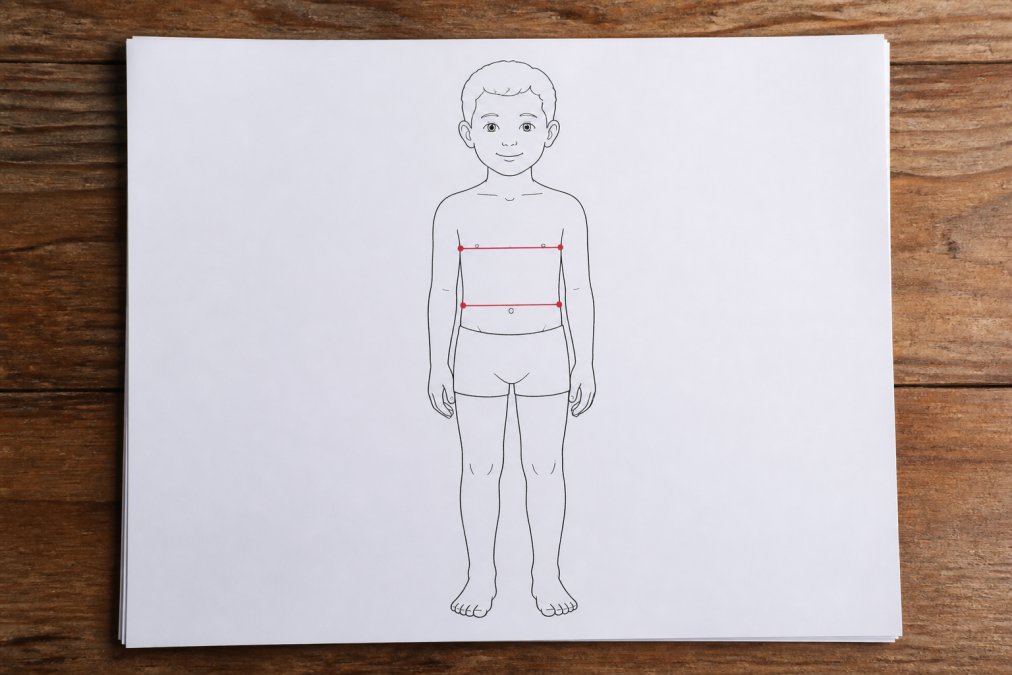
- Height: Have your child stand flat against a wall with heels together and look straight ahead. Mark the top of the head and measure from the floor to the mark. Do not measure to the top of the hair; press down gently to flatten any volume.
- Chest: Wrap the tape around the fullest part of the chest, under the armpits, keeping the tape level and snug but not tight. The tape should sit flat against the skin without any gaps or pinching. This is the measurement that determines top and dress sizing.
- Waist: Find the natural waist, which is the narrowest part of the torso, usually just above the belly button. For toddlers with round bellies, this is often higher than parents expect. Have the child bend sideways; the crease that forms is the natural waist.
- Inseam vs. Outseam: This is where most measurement errors occur. The inseam runs from the top of the inner thigh down to the floor. The outseam runs from the top of the hip bone down to the floor. For pants, the inseam determines leg length, while the outseam determines the total rise and length. A child with a long torso and short legs will have a long outseam but a short inseam. Measure the inseam by having the child stand with feet shoulder-width apart; place the tape at the crotch seam and run it straight down to the floor. Use the string method if the child will not stand still.
Record these numbers in inches and centimeters, and write the date on the paper. Children grow in unpredictable spurts, so re-measure every two to three months rather than assuming last season's numbers still hold.
How to Measure a Garment for Comparison
Body measurements alone are not enough when shopping across brands. You also need to measure a garment that currently fits well. Lay the garment flat on a table, smooth out wrinkles, and measure:
- Across the chest: From armpit seam to armpit seam.
- Total length: From the top of the shoulder seam to the bottom hem.
- Waistband (unstretched): Lay the pants flat and measure from one side of the waistband to the other, then double that number.
- Inseam (garment): From the crotch seam to the bottom of the leg hem.
These garment dimensions are what you will compare against the brand's published size chart. A child with a 21-inch chest may fit a shirt with a 20-inch chest measurement if the fabric has stretch, but will need a 22-inch chest if the fabric is rigid.
Toddler Clothing Size Chart by Age and Weight
A toddler clothing size chart by age and weight is a useful reference, but only when you treat it as a general guide rather than a rule. Most brands publish charts that map age ranges to height and weight brackets, and these charts are the closest thing the industry has to a standard.
The table below summarizes typical toddler size bands, but you should always compare your child's measurements against the specific brand's size chart before ordering.
Size Label |
Age Range |
Average Height |
Average Weight |
Fit Philosophy |
|---|---|---|---|---|
12-18M |
12-18 months |
30-32 inches |
22-26 lbs |
Room for diaper, shorter length |
18-24M |
18-24 months |
32-34 inches |
26-29 lbs |
Transitional, often slim |
2T |
2-3 years |
33-36 inches |
28-32 lbs |
Wider for walking, longer torso |
3T |
3-4 years |
36-39 inches |
31-36 lbs |
More relaxed, easier to pull on |
Decoding T Sizes vs. Numeric Sizes
The difference between "T" sizes and numeric sizes confuses many parents, and understanding it is key to consistent children sizing. T sizes (2T, 3T, 4T) are cut for toddlers who are still developing motor skills, so they typically have wider waists, shorter lengths, and more room in the seat for a diaper or training pants. Numeric sizes (4, 5, 6) mark the shift to "little kid" clothing, which is cut slimmer and longer.
A child who fits perfectly into a 3T might find the equivalent numeric size 4 too long in the inseam but too tight in the hips. This is not a manufacturing error; it is a deliberate difference in body proportions between age groups. When your child is between a T size and a numeric size, prioritize the measurement that matters most for the garment.
International Sizing Conversion: US, UK, and EU
If you are shopping from international brands, the size label alone is nearly meaningless. The US, UK, and EU each use different base standards for children's clothing, and they do not align neatly.
- US sizes (2T, 3T, 4, 5, 6) are based on average height and weight percentiles for American children, with T sizes cut for toddler proportions.
- UK sizes (2-3, 3-4, 4-5) use a similar age-based system but are cut for slightly different body proportions. A UK 2-3 typically fits a child who is 35-38 inches tall, which overlaps with a US 2T or 3T depending on the brand.
- EU sizes (86, 92, 98, 104) are based on height in centimeters. An EU 92 is designed for a child who is approximately 92 cm (36.2 inches) tall. This system is more precise because it is purely height-based, but it does not account for weight or body shape.
EU standard EN 13402 provides a height-based framework for children's clothing sizing
A child who is 36 inches tall and 30 pounds might wear a US 2T, a UK 3-4, or an EU 92. But the US 2T will be wider through the hips for diaper room, the UK 3-4 will be slimmer and longer, and the EU 92 will be the most true to height with less variation in width.
How to Convert Between Systems
The safest conversion rule is to use height in inches or centimeters as your anchor, not age. Convert your child's height to centimeters (1 inch = 2.54 cm) and match it to the EU size first, since that system is the most standardized. Then use the brand's specific size chart to adjust for width and proportion.
This conversion approach is especially important for online shopping, where you cannot feel the fabric or try the garment on. A brand that lists measurements in both inches and centimeters is more likely to follow a standardized system.
How Fabric and Fit Affect Size Consistency
Fabric composition is the most overlooked variable in children's sizing, and it explains why two shirts with identical size chart measurements fit completely differently. A garment made from 100% cotton with no stretch will fit true to the garment dimensions. A shirt with 5% spandex or elastane will stretch to accommodate a wider chest or fuller belly, giving you more forgiveness if you are between sizes.
The weave matters as much as the fiber content. A tightly woven cotton poplin has almost no give, while a jersey knit stretches in both directions and recovers its shape. For children who are between sizes, choosing a fabric with some stretch is a practical way to extend the life of a garment.
Tips for Buying Kids Clothes Online That Fit
Online shopping removes the ability to try things on, so your measurement strategy has to be more disciplined. The most reliable approach is to measure a garment your child already owns that fits well and compare those garment dimensions to the size chart on the product page.
Using Garment Dimensions and Size Charts
Lay a well-fitting shirt flat on a table, measure from armpit to armpit across the chest, and then measure from the top of the shoulder down to the hem. Compare those numbers to the garment measurements listed in the product description. Many online retailers, including Tots & Trends by Morgan, publish garment dimensions alongside the size chart, which removes the guesswork. If the retailer does not provide garment measurements, send a message asking for them before you order.
Body proportions matter here as much as the numbers. A child with a long torso and short legs needs a top sized up for length but pants sized true to the waist. A child with a rounder belly needs a waistband with stretch or an adjustable feature, even if the height and weight suggest a smaller size.
Plan for Growth Spurts: When to Size Up
Children grow in unpredictable bursts, and a garment that fits perfectly in September can be too tight by November. The practical strategy is to buy for the current fit plus a small buffer, not for the size you hope your child will reach. For tops and dresses, look for a relaxed fit through the chest and shoulders. For pants, prioritize an adjustable waistband or elastic back.
A useful rule of thumb is the "two-finger test." If you cannot fit two fingers between the waistband and your child's belly, the pants are too tight now and will be unwearable within a month. For overalls and dresses with straps, choose styles with multiple button positions so you can let the garment out as your child grows.
Your Strategy for Consistent Children Sizing
Consistent children sizing comes down to a repeatable process, not luck or brand loyalty. Measure your child every two to three months and record the numbers. Always compare your child's height, chest, waist, and inseam against the brand's specific size chart, not a generic age-based table. When you shop online, measure a garment that already fits and compare those garment dimensions to the product listing.
The brands that make this easy are the ones that publish accurate garment dimensions, respond to sizing questions, and cut their clothes with real children's body proportions in mind. At Tots & Trends by Morgan, every piece in our curated collection is selected with these principles in mind, blending on-trend style with quality fabrics and consistent cuts that parents can rely on. For guidance on measuring your child or selecting the right size, our team is happy to help you find the perfect fit for every milestone.
Frequently Asked Questions
Why does children's clothing sizing vary so much between brands?
There are no universal retail standards for children's clothing sizes in the US. Each brand creates its own fit based on its target audience and design aesthetic. One brand's 3T might be cut for a slim 35-pound child, while another designs for a more relaxed fit. This is why relying on the tag alone often leads to poor fits. Always check the specific brand's size chart and compare your child's body measurements, not their age, to ensure the best fit.
Is 5T the same as a standard size 5?
No, 5T is not the same as size 5. The 'T' in toddler sizes stands for 'toddler' and is designed for children who still wear diapers. These sizes have a roomier fit through the hips and a shorter inseam than standard numeric sizes for the same age. Size 5 is cut for a preschooler's body proportions, which are leaner and longer. When a child is potty-trained, it is usually time to transition from T sizes to numeric sizes.
Do 2-year-olds typically wear 2T or 3T?
It depends entirely on the child's height and weight, not their age. A 2-year-old at the 50th percentile for height will often fit into 2T. However, many children this age are tall for their age or have a longer torso, making 3T a better choice for length. Since toddler sizes are based on average body proportions, growth spurts can shift a child into the next size up quickly. Always measure your child and compare those numbers to the brand's specific size chart.
How can I account for growth spurts when buying clothes online?
To get more wear out of an outfit, consider sizing up when the item is meant for a season that is several months away. Look for clothing with adjustable features like an elastic back or adjustable waistband to help bridge the gap between sizes. Also, read customer reviews for feedback on whether the item runs small or large. If a brand runs 'true to size,' but your child is between sizes, choosing the larger size is usually a safe strategy for accommodating a growth spurt.