

Table of Contents
- Why Durable Shoes Matter for Active Toddlers
- How Should Toddler Shoes Fit?
- Toddler Shoe Size Guide: Measuring at Home
- Toddler Shoes with Flexible Soles: Why They Matter
- Materials and Construction That Hold Up
- When to Replace Toddler Shoes
- Caring for Toddler Shoes to Extend Their Life
- Common Mistakes to Avoid When Choosing Durable Shoes
- Frequently Asked Questions
Last Updated: October 12, 2026
Why Durable Shoes Matter for Active Toddlers
Toddler feet grow fast, and cheap shoes fall apart even faster. Learning how to choose durable shoes for active toddlers saves money and protects growing feet at the same time. This guide from Tots & Trends by Morgan walks through fit, materials, and the warning signs that a pair is done.
Here's the core problem: a toddler takes thousands of steps a day, and many of those steps happen on rough surfaces like playground asphalt and gravel. Flimsy shoes wear through at the toe and heel within weeks. Good shoes hold their shape, keep their grip, and support natural foot movement through all of it.
Durable shoes are built to survive daily active play without losing structure, fit, or traction. That definition matters because durability is not just about how long a shoe lasts. It is about whether the shoe still supports growing feet after months of wear.
Below, we'll show you exactly how to check fit, spot quality construction, and know when to replace a pair.
How Should Toddler Shoes Fit?
Toddler shoes should fit with about a thumb's width of space between the longest toe and the front of the shoe. That gap allows for toe movement and gives growing feet room without letting the foot slide around.
A good fit also means the heel stays locked in place. If the heel slips when your child walks, the shoe is too loose. If the toes curl or the sides bulge, it is too tight.
Check the fit with your child standing, not sitting. Feet spread when they bear weight, so a shoe that feels fine seated can pinch when they walk.
Toe Room and Width Checks
Press the front of the shoe with your thumb while your child stands. You should feel a small gap, not the toes pressed against the tip. Then run a finger along each side to check width. The shoe should feel snug but never pinched.
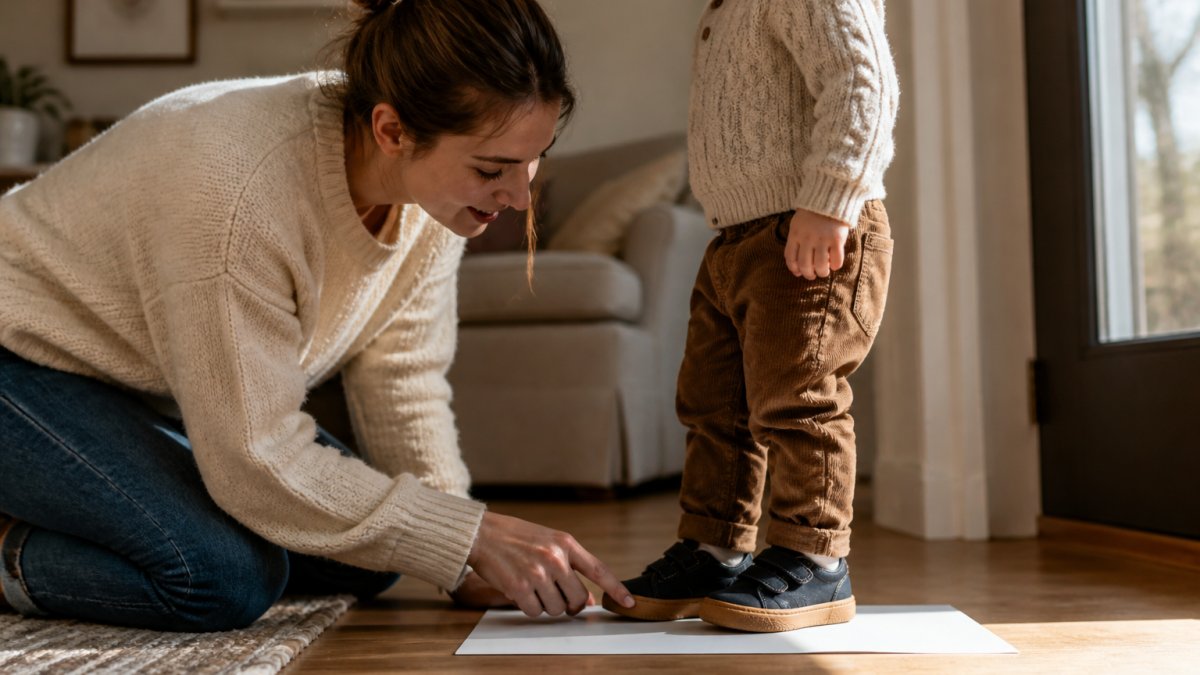
Toddler Shoe Size Guide: Measuring at Home
A toddler shoe size guide starts with one simple step: measure the foot at home every few months. Feet can grow a full size in just a few months during the toddler years, so a shoe that fit in spring may pinch by fall.
Here is how to measure:
- Have your child stand on a piece of paper with their heel against a wall.
- Mark the tip of the longest toe.
- Measure the distance from the wall to the mark in centimeters.
- Measure both feet, since one is often slightly larger.
- Size to the larger foot, then add room for toe movement.
Measure at the end of the day. Feet swell slightly during play, and that is when shoes feel tightest.
Toddler Shoes with Flexible Soles: Why They Matter
Toddler shoes with flexible soles support natural foot movement, which helps build strong muscles in the feet and ankles. A sole that bends easily lets the foot roll through each step the way it would barefoot.
Test flexibility by holding the shoe and bending the front half upward. It should flex where the toes bend, not stay stiff. Soft soles work best for early walkers, while slightly firmer soles suit confident runners.
The trade-off is real. Very stiff shoes protect feet but limit movement. Very soft shoes feel natural but wear out faster on rough ground. For active toddlers, look for a sole that bends at the ball of the foot but holds its shape.
Materials and Construction That Hold Up
The most durable toddler shoes use sturdy uppers, reinforced stitching, and rubber soles with real tread. Material choice drives how long a shoe survives active play.
- Leather resists scuffs and holds shape well, though it needs occasional care.
- Mesh keeps feet cool and dry but can tear at high-wear spots.
- Canvas and cotton breathe well but wear faster on rough surfaces.
- Rubber soles with deep tread grip better and last longer than thin foam.
Look at the toe cap and heel. These take the most abuse, so reinforced toe protection and a solid heel counter are signs of sturdy construction. Check the stitching too. Double stitching at stress points outlasts single lines.
When to Replace Toddler Shoes
Replace toddler shoes when the sole is worn smooth, the toe is scuffed through, or the shoe no longer holds its shape. A worn-out shoe loses grip and support, which raises the risk of slips on the playground.
Fit is the other trigger. Once the thumb-width gap disappears, the shoe is too small, no matter how good the condition. Most active toddlers need new shoes every three to four months.
A Practical Durability Inspection Checklist
Run this quick check every few weeks:
- Sole tread still visible and grippy, not smooth
- Toe cap intact, no holes or deep scuffs
- Heel counter still firm, not collapsed
- Stitching tight, no loose or frayed threads
- Shoe bends at the ball of the foot, not the middle
- Thumb-width gap still present at the toe
- No sharp edges or exposed inner lining
If two or more items fail, it is time to shop.
Caring for Toddler Shoes to Extend Their Life
Cold, wet weather is hard on toddler shoes. Rain, slush, and road salt break down materials faster, so a little maintenance goes further right now than at any other time of year.
Rotate between at least two pairs. Giving each pair a full day to dry inside slows the breakdown of adhesives and foam. Moisture trapped in a shoe overnight weakens the sole bond and encourages odor. A simple rotation, one pair for daycare, one for weekends, can noticeably extend the usable life of both.
Dry shoes the right way. Never put toddler shoes on a radiator, in a dryer, or directly in front of a space heater. High heat warps the sole, cracks the upper, and shrinks the lining. Stuff shoes with crumpled newspaper or a dry cloth to absorb moisture and hold their shape, then let them air-dry at room temperature away from direct heat. It takes longer, but the shoe keeps its structure.
Clean by material, not by habit.
- Leather: Wipe with a damp cloth and let it dry naturally. A light conditioner keeps leather from cracking in dry winter air, but avoid heavy waxes that clog the material.
- Mesh and knit: Brush off dried mud with a soft brush before wiping. Never soak mesh, it loses shape and takes forever to dry.
- Canvas: Spot-clean with a damp cloth and mild soap. Rinse the cloth, not the shoe.
- Rubber and synthetic uppers: Wipe with a damp cloth. These handle moisture best but can stiffen in cold if left wet.
Deal with salt and slush immediately. Road salt leaves a white residue that dries out leather and breaks down rubber over time. Wipe shoes with a damp cloth as soon as you get inside after a walk through treated sidewalks or parking lots. A quick wipe now prevents a cracked upper later.
Loosen closures before removing shoes. Undo straps or laces every time instead of pulling shoes off by the heel. This one habit prevents stretched openings, torn linings, and crushed heel counters, the three most common structural failures in toddler shoes.
Store shoes indoors, out of sunlight and off cold floors. Ultraviolet light degrades rubber and fades fabric. Cold concrete floors pull warmth from the sole and can make rubber stiff and brittle over time. A simple shoe bin near the door works fine.
Check insoles and liners. Removable insoles can be pulled out, aired, and rinsed separately. If the insole is glued in and has flattened or curled, the shoe has lost its cushioning and is a candidate for replacement.
Common Mistakes to Avoid When Choosing Durable Shoes
The biggest mistake is buying for looks over construction. A cute shoe with a thin foam sole and glued seams will not survive a month of active play.
Other common mistakes:
- Sizing up too far, which causes trips and blisters
- Choosing stiff soles that block natural foot movement
- Ignoring weight, since heavy shoes tire little legs fast
- Skipping the fit check after a few weeks of wear
- Buying one pair and wearing it daily until it falls apart
The balance point is this: durable shoes for active toddlers should be sturdy enough to last and flexible enough to let feet move. That combination, not price or style alone, is what protects growing feet.
Frequently Asked Questions
How can I tell if toddler shoes are durable?
Press the sole where the foot flexes, at the ball of the foot, and see if it bends easily without collapsing. Twist the shoe gently; it should resist twisting without feeling stiff. Check the toe cap for reinforcement, tug at the outsole edges to see if glue holds, and look for stitching rather than glue alone at stress points. Durable shoes combine flexible soles with sturdy uppers, so both should pass these quick tests.
How should toddler shoes fit?
There should be about a thumb's width of space between the longest toe and the front of the shoe, and the heel should stay snug without slipping. The widest part of the foot should match the widest part of the shoe, and your toddler should be able to wiggle their toes freely. Always measure both feet, since one is often slightly larger, and fit to the larger foot.
When should I replace my toddler's shoes?
Check the fit every 8 to 12 weeks, since toddler feet can grow quickly. Replace shoes when the thumb-width of toe room disappears, when the heel slips out during walking, or when you see uneven sole wear, cracks in the midsole, or separation between the upper and sole. Worn-out traction and flattened cushioning are also signs that it is time for a new pair.
Are hand-me-down shoes suitable for toddlers?
Hand-me-downs can work if the soles show even wear and the shoe still holds its shape, since a shoe molded to another child's gait may not support your toddler's feet well. Avoid passing down shoes with worn-down tread, compressed cushioning, or visible structural damage. For everyday active play, a fresh pair that matches your child's current size is the safer choice.
Finding shoes that keep up with a toddler is a real challenge, and settling for flimsy pairs costs more in the long run. Tots & Trends by Morgan offers a carefully curated selection of children's clothing built around style, quality, and comfort, so parents can dress little ones for every milestone and every messy afternoon of play. Explore the collection and find pieces made to last through the season. SHOP NOW.