

Table of Contents
- Start With a Wardrobe Audit and Shopping List
- Build a Fall and Winter Capsule Wardrobe for Kids
- Master Buying Secondhand Kids' Clothes
- Understand Children's Clothing Size Chart and Measurements
- Shop Sales, Clearance, and Use Coupons Strategically
- How to Shop for Kids' Clothes Online Without Overspending
- Calculate Cost Per Wear and Avoid Impulse Purchases
- Frequently Asked Questions
Last Updated: October 20, 2026
Learning how to save money on kids clothes doesn't mean sacrificing style or quality. The good news is that how to save money on kids clothes involves practical strategies that work year-round, especially during fall and winter when layering and durability matter most.
This guide covers seven proven approaches to stretch your clothing budget while keeping your kids looking great.
Start With a Wardrobe Audit and Shopping List
Before spending a single dollar, take inventory of what your child already owns. Pull out every piece and organize by type: tops, bottoms, outerwear, and accessories.
Look for gaps and overlaps. If your child has five red shirts but no neutral basics, you know what to prioritize.
Create a shopping list based on what's missing, not what catches your eye. Write down specific items needed, quantities, and acceptable price ranges.
This foundational step saves money by eliminating waste. Many parents buy clothing their children never wear simply because they didn't know what they already had.
Build a Fall and Winter Capsule Wardrobe for Kids
A capsule wardrobe is a small collection of versatile pieces that mix and match easily.
Start with these essentials:
- 5-7 long-sleeve tops
- 3-4 pairs of bottoms (jeans, leggings, cords)
- 2-3 sweaters or cardigans
- 1 warm jacket
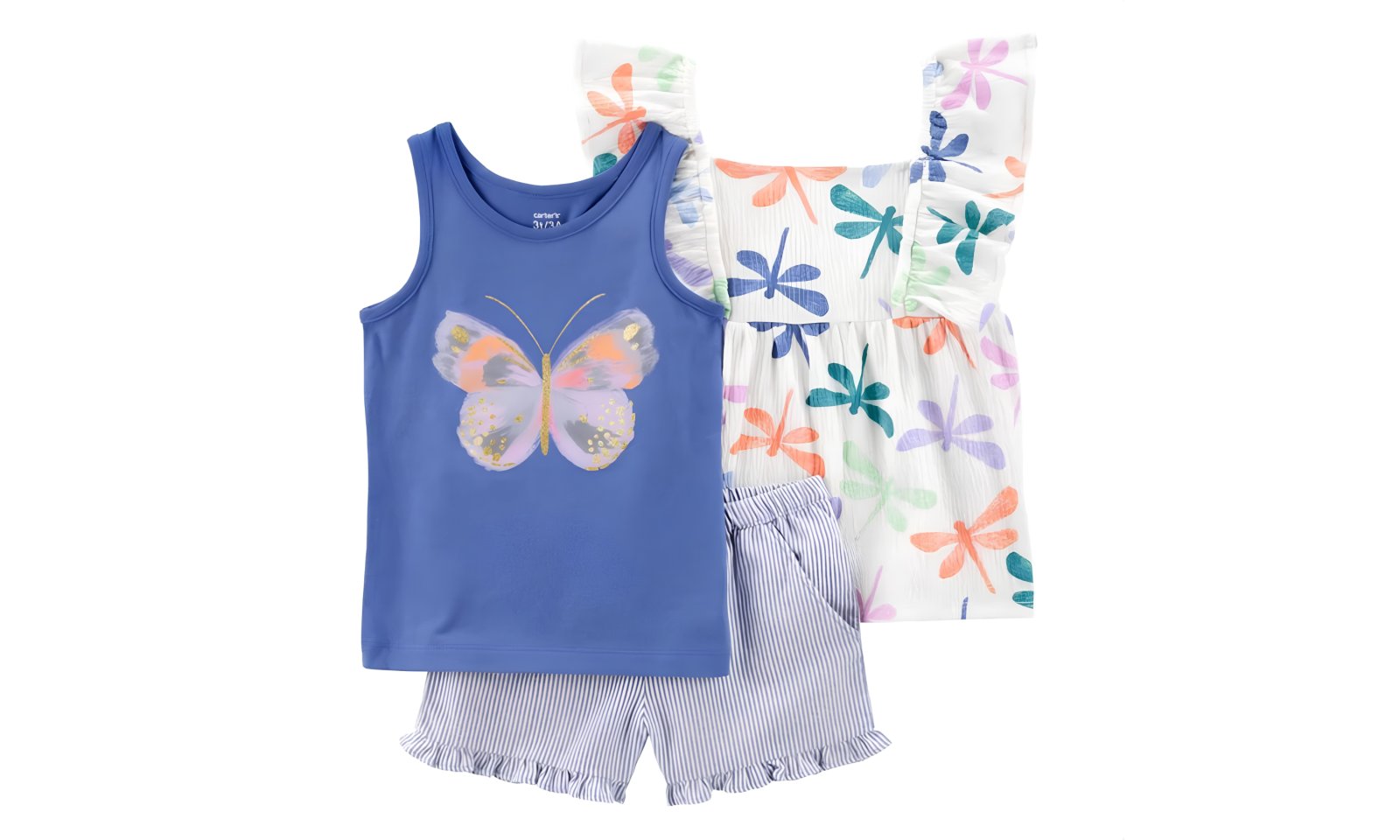
Quality matters more in a capsule wardrobe because each piece works harder. The Carter's Kids' 3-Piece Playwear Set offers mix-and-match pieces at just $25.00 that work for both everyday play and casual outings.
Aim for pieces that coordinate across multiple outfits rather than standalone items. One quality sweater that pairs with three different bottoms delivers more value than three single-use pieces.
Master Buying Secondhand Kids' Clothes
Secondhand shopping is one of the most effective ways to stretch a clothing budget. Children's clothing in good condition is widely available because kids outgrow items before wearing them out, especially fall and winter pieces like jackets, sweaters, and snow pants, which are expensive new but hold up through multiple children.
Start with these reliable secondhand sources:
- Local consignment shops that specialize in children's clothing
- Online resale platforms with buyer protection and return policies
- Community Facebook groups dedicated to children's clothing swaps
- Thrift stores with dedicated kids' sections
When shopping secondhand, inspect items carefully for stains, tears, and missing buttons. Check zippers and seams. Wash everything before your child wears it.
The True Cost of New vs. Resale vs. Hand-Me-Down
Price tag is only one part of the cost. The better comparison weighs price, condition, durability, and resale value together:
- New: Highest upfront price, but predictable condition, full return protection, and the widest size selection. Best for items where fit is critical, outerwear, boots, and anything a child will wear daily.
- Resale: Lower upfront price, but condition varies and returns are often limited or nonexistent. Best for items with forgiving fit and low wear-and-tear risk, sweaters, play clothes, and layering pieces.
- Hand-me-down: Free or near-free, but selection is whatever is available and sizing is fixed. Best for basics, pajamas, and play clothes where exact fit matters less.
A useful rule: spend new-money on the one or two items your child wears every single day in cold weather (a coat, boots), and source everything else secondhand or free. That single decision often cuts a fall/winter wardrobe budget more than any coupon.
Swaps, Borrowing, and Community Exchange
Resale gets the attention, but free and low-cost exchange is where the deepest savings live, and it's the angle most savings guides skip entirely.
- Clothing swaps: Many communities and parent groups run seasonal swap events where families bring outgrown fall and winter items and take what fits. Check local library bulletin boards, community centers, and parent Facebook groups for swap dates. Bring a bag, take a bag, and label sizes clearly.
- Family and friend networks: Set up a standing hand-me-down chain with two or three families whose children are one size ahead of yours. A simple group text when a bag is ready keeps the chain moving and costs nothing.
- Borrow for one-off needs: Special-occasion items, a holiday outfit, a flower-girl dress, a winter coat for a single ski trip, are prime candidates for borrowing rather than buying. Ask in parent groups before you buy anything your child will wear fewer than five times.
- Buy-nothing groups: Local "buy nothing" and freecycle groups frequently list kids' clothing, especially at seasonal changeover when families purge outgrown fall and winter items.
Understand Children's Clothing Size Chart and Measurements
Sizing inconsistency frustrates parents shopping online. One brand's size 5 fits differently than another's, and growth spurts mean today's fit becomes yesterday's problem.
Before buying, measure your child:
- Chest: measure around the fullest part
- Length: measure from shoulder to desired hem
- Sleeve: measure from center back neck to wrist
- Inseam: measure from crotch to ankle
Compare these measurements to the brand's size chart, not the size number alone. Many retailers provide detailed charts on product pages. Keep a written record of your child's measurements and update it every 2-3 months during growth spurts.
Buy Current Size or Buy Ahead? A Decision Guide
Buying ahead can lock in deep clearance prices, but it backfires when a child skips a size or the season arrives before the growth spurt does. Use this simple framework before you buy anything on clearance for next fall or winter:
- Buy ahead only when the growth rate is predictable. Children in steady, gradual growth (often ages 2-5) are safer to buy ahead for. Children in the middle of a visible growth spurt are not.
- Buy ahead only for items with forgiving fit. Sweaters, cardigans, dresses, and outerwear with adjustable cuffs or hem allowances tolerate a half-size of error. Tailored pants, fitted jeans, and structured coats do not.
- Buy ahead only one season, not two. A fall jacket bought in January for next fall is a reasonable bet. A fall jacket bought for two years out is a gamble.
- Cap your buy-ahead spend. A common pattern among frugal parents is to limit buy-ahead purchases to a small share of the total clothing budget, so a missed size costs little.
The Half-Size Rule for Outerwear
Fall and winter outerwear is the highest-stakes sizing decision because a too-small coat is unwearable and a too-large coat is a safety concern. A practical rule many parents use: buy the size that fits the child's chest measurement with room for one thick layer underneath, not two. Coats with adjustable cuffs, elastic hems, or removable liners extend usable life by a full season without looking sloppy.
When buying online, choose retailers with clear return policies. Some offer free returns, others charge. Factor return costs into your decision when sizing is uncertain, and check the return window before the season starts, a January clearance coat with a 14-day return window leaves little room to discover a fit problem.
Carter's Kids' 3-Piece Playwear Set →
Shop Sales, Clearance, and Use Coupons Strategically
Timing purchases around sales dramatically reduces costs. Most retailers mark down seasonal clothing as the season ends.
Plan ahead for these sale windows:
- August through September: back-to-school sales
- Late November: Black Friday and Cyber Monday
- January: winter clearance begins
- February: end-of-season clearance intensifies
Sign up for retailer email lists to receive coupon codes before sales start. Many offer first-time buyer discounts or loyalty rewards.
Clearance racks offer the deepest discounts but limited selection and sizing.
Compare prices across retailers before buying. The same brand often costs less at one retailer than another.
How to Shop for Kids' Clothes Online Without Overspending
Online shopping offers convenience but requires discipline to avoid impulse purchases. Create a system to prevent buying items you don't need.
Follow these steps before checking out:
- Review your wardrobe audit and shopping list
- Check your child's current measurements against size charts
- Read reviews from other parents about fit and quality
- Calculate the cost per wear (covered in the next section)
- Wait 24 hours before completing the purchase
Waiting overnight eliminates impulse buys. If you still want the item the next day, it's probably worth buying.
Use wish lists or save-for-later features instead of immediate checkout. This gives you time to compare prices across retailers and find coupons.
Watch return policies carefully. Some retailers charge return shipping or restocking fees. Factor these costs into your decision, especially for items with uncertain sizing.
Calculate Cost Per Wear and Avoid Impulse Purchases
Cost per wear is a simple calculation that reveals true value.
A $40 sweater your child wears twice weekly for two seasons equals roughly 200 wears.
Apply this thinking to every purchase:
- Everyday basics: aim for $0.25-$0.50 per wear
- Seasonal pieces: aim for $0.50-$1.00 per wear
- Special occasion items: $1.00-$2.00 per wear is acceptable
This framework eliminates guilt about spending more on quality pieces that last.
Track what your child actually wears.
The Adidas Kids' 2-Piece Set at $52.00 is a midweight track suit designed for active play.

Saving money on kids' clothes requires planning, patience, and intentional decision-making.
Tots & Trends by Morgan makes this process easier by offering carefully curated, on-trend pieces like the Carter's Kids' 3-Piece Playwear Set and Lands' End Kids' 4-Piece Set that deliver quality and style without premium pricing. These versatile basics work harder in a capsule wardrobe, reducing the total number of pieces you need to buy. Shop Now and start building a smarter, more affordable wardrobe for your children.
Frequently Asked Questions
Is buying secondhand kids' clothing a good way to save money?
Yes. Buying secondhand kids' clothes can cut your spending by 50-70% compared to new retail prices. Secondhand options include resale platforms, consignment shops, and clothing swaps with other parents. Since children outgrow clothes quickly, gently used items often have significant wear left. Check seams, zippers, and stains before purchasing. Secondhand shopping also reduces waste, making it both budget-friendly and sustainable.
How do I know which children's clothing sizes to buy online?
Check the brand's size chart before ordering—sizing varies significantly between manufacturers. Measure your child's chest, waist, length, and inseam, then compare those measurements to the chart rather than relying on age or labeled sizes. If your child is between sizes, read reviews from other parents about whether the brand runs small or large. For fast-growing kids, consider buying one size up if the fit allows, but avoid sizes so large they're unwearable now.
How can I save money on kids' clothes during fall and winter?
Build a capsule wardrobe of versatile basics in neutral colors that mix and match easily, reducing the number of pieces you need. Shop end-of-season clearance sales in late winter for next year's items. Use couponing apps and sign up for retailer rewards programs. Buy quality pieces that last through multiple children or resale. Focus on durable fabrics and classic styles over trendy items that quickly fall out of favor or wear out faster.
What's a realistic budget for kids' clothing, and how do I stick to it?
Track spending using a spreadsheet or budgeting app. Set limits before shopping and avoid browsing sales without a specific need. Plan purchases around seasonal transitions and growth spurts rather than shopping impulsively. Calculate the cost per wear of each item—a $50 jacket worn 100 times costs 50 cents per wear, while a $15 trendy top worn 5 times costs $3 per wear.