

Table of Contents
- What Makes Boutique Clothing Different From Mass-Produced Fashion
- Why Boutique Clothing Costs More: Breaking Down the Markup
- Fast Fashion vs. Boutique Quality: Where the Real Difference Lives
- How to Identify Durable Kids Clothes Before You Buy
- Calculating Cost Per Wear for Kids Clothes: Does Boutique Make Financial Sense?
- Is Boutique Clothing Worth the Price? The Real Answer
- Frequently Asked Questions
Last Updated: August 31, 2026
What Makes Boutique Clothing Different From Mass-Produced Fashion
Boutique clothing differs from mass-produced alternatives in design, construction, and sourcing. Mass-produced clothing relies on economies of scale, factories churn out thousands of identical pieces with standardized patterns, synthetic blends, and minimal quality control. Boutique brands operate differently, focusing on smaller production runs with more attention to garment construction, fabric selection, and finishing details.
The curated collection model is central to boutique retail. Instead of stocking everything available from a manufacturer, boutique retailers handpick pieces that align with specific aesthetic standards and quality benchmarks. At Tots & Trends by Morgan, we filter out poorly constructed items before they reach your closet. You're buying what a knowledgeable buyer selected based on fabric composition, stitching integrity, and brand reputation.
Boutique clothing also prioritizes unique aesthetic. Mass-produced retailers stock the same styles across thousands of locations. Boutique shops carry limited quantities of distinctive pieces, meaning your child is less likely to wear the exact same outfit as five other kids. This exclusivity is part of what justifies the higher price point.
Why Boutique Clothing Costs More: Breaking Down the Markup
Understanding the cost structure behind boutique clothing explains why prices feel steep compared to fast fashion.
Wholesale cost and production volume. Boutique brands typically order smaller quantities from manufacturers than mass-market retailers. A fast-fashion company might order 10,000 units of a single style; a boutique brand orders 500. That volume difference directly impacts the wholesale cost per item. Smaller orders mean higher per-unit manufacturing costs because the factory's setup expenses are spread across fewer pieces.
Supply chain transparency. Many boutique brands prioritize ethical labor and sustainable sourcing, which costs more. Factories that maintain fair wages, reasonable working hours, and safe conditions charge higher rates. If a boutique brand sources organic cotton or uses eco-friendly dyes, that's reflected in the wholesale cost.
Retail markup structure. Boutique retailers often operate with higher overhead than mass-market retailers. A small boutique shop pays rent, utilities, and staffing for a curated retail experience. Online boutiques invest heavily in content, customer service, and community building. The markup reflects these operational realities.
Quality control and returns. Boutique brands typically accept higher return rates because they stand behind their products. If a seam fails or fabric pills unexpectedly, boutique retailers often replace the item without hassle. That customer service infrastructure costs money.
Inventory management. Boutique retailers carry less inventory overall, which means each piece needs to sell at a higher margin to cover overhead. A boutique with 200 total items in stock needs each piece to generate enough profit to sustain the business.
These factors compound. A boutique piece that costs $12 wholesale might retail for $48-65 after accounting for markup, overhead, and quality standards. That same piece from a mass-market manufacturer might cost $3 wholesale and retail for $15-20.
Fast Fashion vs. Boutique Quality: Where the Real Difference Lives
The real difference between fast fashion and boutique quality comes down to specific, measurable factors in garment construction and material choice.
Fabric composition matters more than price alone. Fast fashion typically uses polyester blends or low-grade cotton because they're cheap and easy to manufacture at scale. Boutique brands more often use higher-quality cotton, linen, or intentional blends designed for durability and comfort. A 100% organic cotton piece breathes better, ages more gracefully, and holds up to repeated washing.
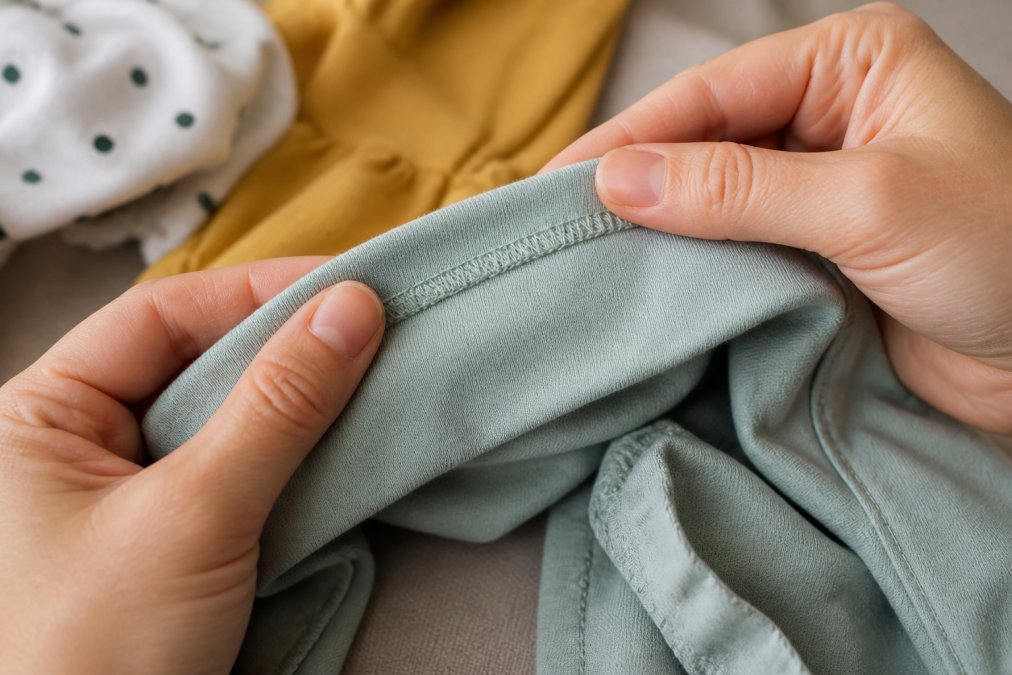
Seam construction reveals durability. Fast fashion uses single-needle seams designed for speed. Boutique pieces often feature double-stitched seams, reinforced stress points, and finished seam allowances that prevent unraveling. A seam that's reinforced at the shoulder and underarm will survive hundreds of washes; a single-needle seam may fail after 30-40 wears.
Hem and cuff quality. Fast fashion often uses narrow, machine-rolled hems that come loose after a few washes. Boutique pieces typically feature wider, more carefully finished hems that hold their shape. The same applies to cuffs and necklines.
Button and closure durability. Fast fashion uses cheap plastic buttons that crack or fall off easily. Boutique brands typically use higher-quality buttons, reinforced buttonholes, and better-quality zippers.
Dye quality and colorfastness. Boutique brands more often use quality dyes that resist fading. Fast fashion uses cheaper dyes that fade significantly after 10-15 washes.
The practical implication: a boutique piece that costs $60 might outlast three fast-fashion pieces at $20 each. The cost per wear often favors boutique when you factor in durability.
How to Identify Durable Kids Clothes Before You Buy
Before spending $50-80 on a boutique piece, you need a system for identifying which items will actually hold up.
Examine the fabric weight and composition. Pick up the garment and feel it. Quality fabric has substance. Check the tag: what's the fiber content? Pure cotton or linen signals durability. Cotton-polyester blends can work if the cotton percentage is high (70% or more). Avoid pieces that are primarily polyester or acrylic unless they're specifically designed for athletic wear.
Look at the seams. Turn the garment inside out. Are the seams straight and even? Do they appear to be stitched multiple times? Reinforced seams at stress points (shoulders, underarms, crotch) indicate durability. Loose threads or unfinished seam allowances are red flags.
Check the hems and cuffs. Are they finished cleanly? A quality hem is wide enough that it won't unravel after washing. Cuffs should be reinforced at the edges. Necklines should be finished with bias tape or a clean binding.
Inspect closures. Do buttons feel solid or cheap? Are buttonholes reinforced? If the piece has a zipper, does it move smoothly?
Feel the weight and drape. Quality pieces have substance. Fabric shouldn't feel stiff or overly thin. When you hold it up, does it drape naturally?
Research the brand's reputation. Check customer reviews. Do people report that seams fail or fabric pills? Do pieces hold their shape after washing? Real parent feedback is more valuable than marketing claims.
Ask about fabric sourcing. Quality boutique brands can tell you where their fabric comes from and how it's processed. If a brand can't answer basic questions about material sourcing, that's a sign they may not be prioritizing quality.
Calculating Cost Per Wear for Kids Clothes: Does Boutique Make Financial Sense?
Cost per wear is the most honest way to evaluate whether boutique clothing is worth the price.
The formula is simple: divide the purchase price by the number of times your child will wear the item. A $60 boutique dress worn 100 times costs $0.60 per wear. A $20 fast-fashion dress that falls apart after 30 wears costs $0.67 per wear. The boutique piece is cheaper on a per-wear basis.
Most parents assume their child will wear each piece only a handful of times before outgrowing it. That's true for special occasion pieces, but everyday items get worn repeatedly. A quality t-shirt or play outfit might be worn 80-120 times before it's outgrown or worn out.
Calculate realistically. How often does your child actually wear this type of item? If it's a special occasion dress, maybe 2-5 times. If it's an everyday shirt, potentially 100+ times over a year. Once you know the realistic wear frequency, the math becomes clear.
Factor in the growth factor. Kids grow fast. A piece that fits for 6 months might be worn 100+ times in that window. Boutique pieces designed to last often have adjustable features that extend the wearing window.
Consider hand-me-down potential. A durable boutique piece can be passed to a sibling or cousin, effectively reducing your cost per wear. Quality pieces often have resale value on secondhand platforms, where you might recover 30-40% of your purchase price.
Is Boutique Clothing Worth the Price? The Real Answer
Is boutique clothing worth the price? The answer depends on your budget, your child's wear patterns, and how long you plan to keep pieces in rotation.
Boutique clothing IS worth the price if:
- You have multiple children and plan to hand pieces down
- Your child wears items frequently (everyday basics rather than occasional pieces)
- You prioritize durability and reduced waste
- You want pieces that hold their shape and color through dozens of washes
- You value unique aesthetic and don't want your child wearing identical outfits to peers
Boutique clothing may NOT be worth the price if:
- You have a single child with no plans for siblings
- Your child only wears items a handful of times before outgrowing them
- You're on a tight budget and can't absorb the higher upfront cost
- Your child is in a phase where clothes get destroyed through rough play
The nuanced reality: Most families benefit from a hybrid approach. Invest in boutique basics, everyday pieces your child will wear frequently, and use fast fashion for trend-driven or occasional items. A quality boutique t-shirt worn 100 times justifies its cost. A trendy boutique piece worn 5 times does not.
At Tots & Trends by Morgan, we help families navigate this decision by offering carefully curated pieces designed for durability and style. Our selection focuses on items that hold up to real childhood: everyday play clothes, versatile basics, and special occasion pieces that earn their price through longevity.
The real question isn't whether boutique clothing is worth the price in absolute terms. It's whether the specific piece you're considering will be worn frequently enough to justify the cost. Calculate the wear frequency, factor in durability, and make the decision based on math, not marketing.
When you're shopping for your children, the choice between boutique and fast fashion comes down to specific garments and realistic wear patterns. Quality boutique pieces deliver value through durability and unique style, but only when your child actually wears them. Tots & Trends by Morgan helps you make that calculation by offering pieces designed for real wear, real durability, and real childhood. Explore our curated collection and discover which pieces earn their place in your child's wardrobe. [SHOP NOW]
Evaluation Factor |
What to Look For |
Why It Matters |
|---|---|---|
Fabric Composition |
100% cotton or high-quality blends |
Better durability, comfort, and longevity |
Seam Construction |
Double-stitched, reinforced stress points |
Prevents seam failure after repeated wear |
Hem and Cuff Quality |
Wide, finished hems; reinforced cuffs |
Resists unraveling through dozens of washes |
Closures |
Solid buttons, reinforced buttonholes, quality zippers |
Closures often fail first; quality matters |
Brand Reputation |
Positive customer reviews about durability |
Real parent feedback reveals actual wear performance |
Cost Per Wear |
Price divided by realistic wear frequency |
True measure of value versus fast fashion |
According to Consumer Reports on children's clothing durability, garment construction quality directly impacts longevity through repeated washing and wear. Seam reinforcement and fabric weight are the strongest predictors of how long a piece will last in active childhood.
Research from the Sustainable Apparel Coalition's standards for textile durability shows that higher-quality construction methods, including double-stitching and reinforced stress points, extend garment lifespan significantly compared to single-needle construction used in fast fashion.
A study on textile waste and clothing longevity found that durable pieces worn frequently over extended periods generate less waste per wear than cheaper items replaced more often, making durability a sustainability consideration alongside cost.
Frequently Asked Questions
Q: What makes boutique clothing more expensive than mass-market brands?
A: Boutique clothing costs more due to several factors: smaller production runs that eliminate economies of scale, higher-quality fabrics and construction, curated collections with unique designs, and investment in quality control. Small-batch production means manufacturers can't negotiate the lowest per-unit prices like mass retailers can. Additionally, boutique businesses often prioritize ethical labor practices and sustainable materials, which add to production costs but justify the price point for many parents.
Q: How do I calculate cost per wear for kids clothes to know if boutique is worth it?
A: Divide the garment's price by the number of times your child will realistically wear it before outgrowing it. For example, a $60 outfit worn 20 times costs $3 per wear; the same price worn only 5 times costs $12 per wear. Boutique pieces typically have higher durability, meaning more wears before fading, stretching, or tearing. Track how long similar fast-fashion items last versus boutique pieces over a season or two. If boutique clothes survive multiple children or hold up through frequent washing, the cost per wear often becomes competitive with or cheaper than replacing fast-fashion items repeatedly.
Q: Does boutique clothing actually last longer than fast fashion?
A: Yes, generally. Boutique clothing typically uses superior fabric composition, reinforced seams, and better construction techniques designed for durability. Fast fashion relies on thin fabrics, minimal stitching, and shortcuts that prioritize cost over longevity. Boutique pieces often survive multiple washes, active play, and hand-me-downs to siblings without significant wear. However, durability depends on the specific boutique—not all boutique brands are equal. Examine garment construction, fabric weight, and seam quality before buying. Boutique pieces may also retain resale value better, offsetting the initial investment if you pass them to other children or sell them online.
Q: How can I tell if a boutique brand is actually high quality or just expensive?
A: Look for specific markers: check fabric content (natural fibers like cotton or linen indicate quality), examine seams for tight, even stitching, and feel the weight and texture of the material. Research the brand's sourcing practices and manufacturing transparency. Read parent reviews focusing on durability after multiple washes and wears. Compare the garment's construction to similar mass-produced items side by side. High-quality boutique brands are transparent about materials, offer detailed sizing information, and stand behind their products with reasonable return policies. Be cautious of boutique brands that dropship generic items with markup—curated collections sourced directly from manufacturers offer better value than resellers passing off mass-produced goods as premium.